Thursday, March 17, 2011

The Need Of Asoka's Dhamma

NEED OF DHARMA

1. There was considered intellectual ferment around 600 B.C. healthy rivalry was apparent among the number of sects such as the Charvaks, Jains and Ajivikas, whose doctrines ranged from bare materialism to determinism. This intellectual liveliness was reflected in the elected interests of the Mauryan rulers. It was claimed by the Jainas that Chandragupta was supporter and there is evidence that Bindusara favoured the Ajivikas.
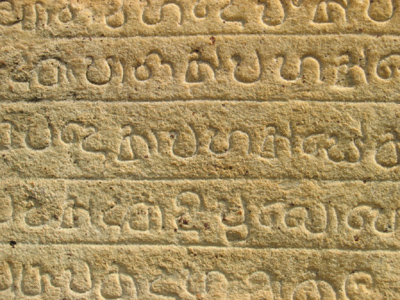
Thus, the Empire of Asoka was inhabited by peoples of many cultures who were at many levels of development. The range of customs, beliefs, affinities, antagonisms, tensions and harmonies were galore. True, Magadha and the fringes of these areas. The north was in close contact with the Hellenized culture of Afganisthan and Iran. The far south was on the threshold of a creative efflorescence of Tamil culture. The ruler of such as Empire required the perceptions were addressed to the public at large. It is in these inscriptions that the king expounds his ideas on dhamma.
It appears, Asoka aimed at creating an attitude of mind among his subjects in which social behavior was accorded the highest place. The ideology of dhamma can be viewed as a focus of loyalty and as a point of convergence for the then bewildering diversities of the Empire. In a way, Asoka's dhamma was akin to the preamble in the constitution of India.

2. A centralized monarchy demands oneness of feeling on the part of its people. The ethics of the dhamma was intended to generate such a feeling, comparable to the preamble of the Indian Constitution.

3. The Mauryan Society with its heterogeneous elements and with economic, social and religious forces working against each other posed the threat of disruption. Asoka, therefore, needed some binding factor to allow the economic activity to proceed on an even keel and thereby ensure the security of his state.

4. Also as the commercial classes gained economic importance and resented the inferior social status as per the sanctions of the Brahmins, they want over to Buddhism, which preached social equality. Their support to the Mauryan king was very vital for the peace and prosperity of the Empire. Asoka thought that he could attract them by the propagation of this dhamma by weaning them away from too closely identifying themselves with Buddhism.

5. Asoka felt that the aforesaid forces of contrary pulls would threaten the peace of the realm not in the general interest of his Empire. Asoka's dhamma therefore, was intended to serve a practical purpose.
The dhamma was not meant to be a religion but what behooves a man of right feeling to do, or what man of sense would do. Such being the nature of his dhamma, it is primarily an ethic of social conduct.
Asoka's Moral code is most concisely formulated in the second Minor Rock Edict.

Thus saith His Majesty:
'Father and mother must be obeyed; similarly respect for living creatures must be enforced, truth must be spoken. These are the virtues of the law of Duty (or "Peity". Dhamma) which must be practisd. Similarly, the teacher must be reverenced by the pupil, and proper courtesy must be shown to relations.
This is the ancient standard of duty (or "Piety") - leads to length of days and according to this men must act.
The three obligations - of showing reverence, respecting animal life, and telling the truth - are inculcated over and over again in the edicts.

Besides, it was meant for all - Buddhists, brahmins, Jains and Ajivikas, In the way, it was the sara or the essence of the good principles of all religions. Also, while pleading on behalf of his dhamma, Asoka passionately appealed for toleration towards all religions and a reverence for each other.

Had this dhamma got anything to do with Buddhist principles, Asoka would have openly stated so in his edicts since he never southt to hid/his support for Buddhism. For that matter, Asoka did not incorporate any of the fundamental tenets of Buddhist faith such as the Four Noble Truths, the chain of casualty the sacred eight-fold path, and the Nirvana. The omissions, also with repeated reference to the concept of svarga or heaven (a Hindu belief) show that his dhamma cannot be identified with Buddhism.

Since Asoka's dhamma was not intended for the cause of Buddhims during his dharama-yatras, he not only visited various places of Buddhist importance, but also gave gifts to sramanas and Brahmins. Most of all, even after entrusting the propagation of dhamma to the Dharma Mahamatras, Asoka continued to style himself as the beloved of the devas, a Hindu concept, since there were no Gods in Buddhism at that time.


SUCCESS OF HIS DHARMA

Asoka specifically states that his missions were sent to various places (Ceylon and various Western countries) and maintains that they were all successful. It is difficult to accept this claim because historical evidence shows that his officials overshot the mark. Definitely, there was resentment against their way of doing things. It is known from evidence that Asoka presumed that not only he was a seeker of truth but also he did reach the truth. Such convictions are always harmful. Most of all, it is important to note that there is no authentic proof that his missions were a success. Significantly, none of Asoka's successors continued the propagation of dhamma. Far worse is the fact that in the later ages, his pillar inscriptions came to be misunderstood as symbols of phallus.

Wednesday, March 16, 2011

Foreign Relations & Diplomacy In Ashoka's Time


Diplomacy and geographical proximity primarily determined the foreign relations maintained by Ashoka. Particularly, the century in which, Ashoka lived was one of continued interactions between the Eastern Mediterranean and South Asia. That is why most of Ashoka's contacts were with South Asia and the West. It appears that this interest was not one sided. A fair number of foreigners lived in Pataliputra to necessitate a special committee under the municipal management to look after the needs of welfare of the visitors. Apart from these major factors determining the foreign relations of Ashoka, one more parameter was the desire of Ashoka to spread his policy of dhamma to distant lands.
To begin with, Ashoka in his foreign relations was a realist defeat and annexation of Kalinga. Also his realism is to be seen in Ashoka not annexing the southern kingdoms (Cholas, Pandvas, Satyaputras and Keralaputras) while being satisfied with theirac knowledgement of his suzerainty. He probably felt that it was not worth the trouble to annex the small territories too.

In other foreign relations Ashoka reveals as an idealist or a monarch who wore the robes of a monk. He sent various missions, though not embassies, to various countries. Their main purpose was to acquaint the countries they visited with his policies, particularly that of dhamma. They may be compared to modern goodwill missions helping to create an interest in the ideas and peoples of the country from which they came. Also, the fact that they are quite unheard of in contemporary literature or in later sources would suggest that they made only a short-lived impression.
Dhamma Chakra

In spite of the above reservations, the missions must have opened a number of channels for the flow of Indian ideas and goods. It is unlikely that Ashoka expected all the kings who had received missions to put the policy of dhamma into practice, although he claims that his did happen. It is curious to observe that there is no reference to these missions in the last important public declaration of Ashoka, the seventh pillar edict. In this edict Ashoka mentions the success he had with his welfare services and the widespread propagation of dhamma but all within the empire.

The territory immediately adjoining the empire of Ashoka on the West and that Antiochus. There is ample evidence of contacts of similarity in cultures. The use of Kharoshti in the Shahbazgarhi and Mansehra edicts in the north is evidence of strong contact with Iran. The fragmentary Aramaic inscription at Taxila and another of the same kind from Kashmir point to continue inter communication between the two areas.

Apart from contacts with Iran, Ashoka Empire was close to various Greek kingdoms. There are references to the Greeks in the rock edicts of Ashoka. On certain occasions the word used refers to the Greek settlements in the north-west and on others to the Hellenic Kingdoms. Antiochus II these of Syria is more frequently mentioned. He other Hellenic Kings where missions were sent were Ptolemy-II Philadephus of Egypt, Magas of Cyrene, Antigonus gonatas of Messedonia, and Alexander of Eorius.

Apart from these western contacts, tradition maintains that Ashoka visited Khotan. This cannot be substantiated. On the other hand, Ashoka maintained close relations with modern Nepal. Tradition states that his daughter, Charumati was married to Devapala of Nepal.
On the East, the Mauryan empire included the provice of Vanga, Since Tamralipti was the principal port of the area, Indian missions to and from Ceylon are said to have traveled via Tamaralipti.

The extent of the influence of Ashoka's power in South India is better documented than in north India. The edicts of Ashoka are found at Gavimathi, Palkignuda, Brahmagiri, Maski, yerragudi and Siddapur, Tamil poets also make references to the Mauryas.
More Important were the contacts with Ceylon. Information is available in the Ceylonese Chronicles on contacts between India and Ceylon. Coming of Mahindra to Ceylon was not the first official contact. Earlier, Dhamma missions were sent. A Ceylonese king was so captivated by Ashoka that the top called himself as Devanampiya. Ashoka maintained close relations with Tissa, the ruler of Ceylon. Relationship between Ashoka and Tissa was based on mutual admiration for each other. 

What interests of the country or the aims of Ashoka were served through his missions? Ashoka primarily tried to propagate his dhamma and may be incidentally Buddhims. He claimed that he made a spiritual conquest of all the territories specified by him as well as a few more territories beyond them. This claim definitely appears to bean exaggeration. There is no historical evidence to show that Ashoka missions did succeed in achieving their aim particularly when the dhamma happened to be highly humanistic and ethical in nature. After all, Ashoka was neither a Buddha nor a Christ to appeal to various people. Neither a St. Peter nor an Ananda to successful spread the message of their Masters. Not did he possess fighting men to spread his message just as the followers of prophet Mohammed. Thus, when there is no follow up action after the missions visited the various parts of the world, it is understandable that no one paid any heed to his message. 

Evertheless, there is one intriguing point about the success of his foreign missions. In likelihood, the history of the Buddha and his message must have spread to the various parts. What did they need to? Although it is difficult to answer this question, it is of importance to observe that there are certain similarities between Christianity and Buddhism - suffering of man, Mara & Satan, Sangha Monasteries with Bikshus and Monks, and the use of rosary by Buddhist and Christian's monks.

Tuesday, March 15, 2011

Indus And Vedic Civilisation

There is muc to be contrasted between the cultures of the Harappans and the Aryans. There are indeed a few points of similarities, but they are not of any significance. Why the points of contrast are more is primarily because of geographic location, economic activity and the religious practices followed by both the cultures. Far more important is the fact that the Aryans, with a plasticity of mind, made life vibrant; whereas, the Indus life looks more like stylized puppet show.

The plasticity of the Aryan mind was shown in the language as well as the way in which they adapted agricultural and settled life. The seals of the Indus Valley show that the pictographs remained statis, whereas, the Aryan language in the Rig Veda at places rises to musical levels. The success with which the Aryan writings were composed reveals the ability of the Aryan mind to grasp the mulitiple dimensions of human life. And language which exhibits immense potentialities in its vocabulary reveals that the community is full of potentialities. On the other hand, out of nearly 400 characters known to the Harappans only a few were repeated time and again.

The other manifestation of Aryan civilization, that is, its capacity to change and adapt itself, has given a continuity to Indian Civilization despite the absence of mighty empires. On the other hand, the Indus Valley people reached a blind alley and the never learnt anything from other civilizations like the Sumerian. Adaptability or ability to respond to challenges is the hallmark of any youthful civilization. The Indus civilization reached its senilithy by 2000 B.C. whereas the Aryan Civilization was full with creative dynamism.
Archaeology is the only source of our knowledge of the Harappan civilization, but information concerning the Vedic Aryans depends almost entirely on literary texts, which were handed down by the oral tradition. It is clear from the material remains that the Harappan civilization was in certain respects superior to that of the Aryans. In Particular it was a city civilization of a highly developed type, while by contrast city life was unfamiliar to the Aryans. The superiority of the Aryans lay in the military field. In which their use of the light horse chariot played a prominent part, or in literary exuberation.

Harappans were peace loving city-dwellers and good planners as is evident by grid pattern towns, elaborate drainage system, street lights, kelp-burnt brick houses, fortifications, granaries, baths and wells. The early Aryans were not city builders. Their way of life, nomad-pastoralists as theywere, was dominated by war like stock-breeding (they practiced a little agriculture) and migrations. City buildings etc. as a large-scale socio-economic activities is only much later mentioned in the later Vedic texts, epics and the Puranas.
The Harrapa culture is located in the Indus Valley and western India and its urbanization is based on a chalcolithic system with and absence of iron. Later Vedic society centering on the Ganges Valley from which the Harappan culture is largely absent owes its gradual urbanization to iron technology, the widespread domestication of the horse and the extension and intensification of plough agriculture. (Iron, horse and plough being nearly absent - some evidence in later Harappan sites).

The expansion and budding off of the Harappan system in the east as far as Alamgirpur (U.P.) and to the neighbouring areas was neither 'colonisation' nor was it 'political expansion' of any from, it was rather the expansion in terms of the permeations of the socio-economic and socio-cultural systems of Harappan society whereas, the Aryan advance towards eastern region - the Doab of the Ganges and Jamuna - was no doubt facilitated by their horse chariots and effective weapons and can be viewed as 'colonisation' or 'political expansion' though not all the Aryan culture contacts and expansion need have been of a violent kind.

The focal centers of the Harappan culture remained for a long time the twin cities of Harappa and Mohenjo-daro and it is from these centers that Harappan culture budded off, whereas the focus of attention of the Rig Veda was the Punjab and in the later Vedic period it shifted to the Doab of the Ganges and Jamuna rivers. The Punjab seems gradually to fade into the background and was regarded even with disapproval.

The Harappan society had a very complex social stratification, division of labour and multiplicity of crafts and industries, urbanism was its marked feature with Harappans enjoying a settled and sedentary life, and in this society the priest and the merchant played dominant roles perhaps constituting a 'ruling' elite. On the other hand, in the early period the Aryans were organized into a social organization which may be described as 'tribal' or rural' one with a minimal of division of labour and sedentariness. It was sed fully with more pronounced and increased division of labour when specialized trades and crafts appeared. But in this society it was not the priests and the merchants (Vaishyas) but the Priests and the Kshtriya who constituted the rule in elite (though with a tendency to rivalry).

In the Harappan society the Priestly class was of great importance as the central authority. Though there is little evidence in the Rig Veda of any special importance of the priests, however in later Vedic society, the priests as a class assumed a form of institutional authority. The institutions of slavery and prostitution were common to both the societies. 

The entire Harappan civilization was the product of an available food surplus (wheat and barley), a fairly high level of craft industry, a script and most important of active commercial intercourse by which it was able to obtain its different and varied material from places far and near both in India (the sub-continent outside the Harappan sphere was not terra-incognita) and outside (i.e. Sumerian towns, Baluchistan and Central Asia). Both northern and southern India was connected in Harappan period by ties of brisk trade. But the early Aryans did not fully emerged out from the food-gathering and nomadic pastoral stage. They hated the panis, i.e. those who indulged in trade. Though by the end of the Vedic age trade contracts and commercial inter-course did not reach the Harappan level. It was only by the end of the Vedic period that the Aryans had some familiarity with the sub-continent.

The religion of the Harappan differed widely from that of the Vedic people. The Harappan practiced the cults of Sakti (mother Goddess) and Pasupati (Proto-Shiva) of animal-tree and stone worship and of Phallus and Yoni, i.e. fertility cult. The early Aryans condemned many of these cults. Harappans worshiped Mother Goddess but the Female deities played a minor part in Vedic religion though the Aryans provided spouses to their gods by later Vedic times. But the fear of the Phallus worship was replaced in the Yajur veda by its recognition as an official ritual. Siva also gained increased importance in the later Vedas. The Aryans anthropomorphized most of the forces of nature and prayed to them as Indra, Varuna, Agni, Mitra, Rudra, Soma, Surya, and Asvins. The fire of sacrificial cult was common to both. Vedic Aryans worshipped the cow while the Harappans reserved their veneration for bulls. The Harappans were iconic and the Aryans aniconic. Ascetic practices were known to both.

That the Harappan had a ruling authority or elite and / or an administrative organization cannot be doubted. Almost uniform planning of the cities and presence of sanitary system, standard weights and measures, assembly halls, huge granaries and citadels point to the existence of an authority, but what it was like as the later Vedic period the Aryan tribes had consolidated in little kingdoms with capitals and a sedimentary administrative system with important functionaries the Purohit and the twelve ratrins playing dominant role in support of the monarchy, the prevalent form of government.


The food habits of the Harappans were almost identical with those of the later Aryans if not early Aryans. The Harappans unlike the Aryans, preferred indoor games of outdoor amusements (chariot racing and hunting) though dice was popular past time with both. Playing music, singing and dancing were common to both. But about the musical instrument of the Harappan little is known or not known while the Aryans had the drum, lute and flute with cymbals and the harp as later additions. The Harappans buried their dead - the Aryans largely created their dead. The Harappans used a script, which remains undeciphered to date in spite of many claims for its deco din, where as references to writing in Vedic society came at a much later stage.

In art the Harappans made considerable progress. Their works of art add tour comprehension of their culture. In fact, the earliest artistic traditions belong to them. In sculpture (beareded man from Mohenjo-daro and two sand stone statuettes from Harappa), though a very few sculptures survive, in metal (bronze dancing girl) and ivory works, in terracotta's (small images and figures of animals, birds or human or animal and inscription a 9 Harappan script on them), and in their pottery (painted red and black, at times glazed), the Harappan show vigor, variety and ingenuity. On the other hand, Rig Vedic age is devoid of any tangible proof of Aryan achievements in these directions. In fact the Rig Veda says nothing of writing, art and architecture. The art of ceramics made Harappan, the Vedic pottery was a simple one.
The Harappans lacked that plasticity and dynamism of mind which is very essential for further growth and survival and they refused to learn from others, on the other hand, the Aryans possessing what the Harappans lacked, were youthful enough to be receptive, adaptive and assimilative, transforming themselves into a comprehensive civilization which in due course of time became essentially composite in character.

In the end we have to say that apart from the minor causative factors causing difference like the close mindedness of the Harappans and contrasted to the Plasticity of the Aryan mind, formalized and ritualized religion of the Harappans as contrasted to the animals and the metaphysical traits of the Aryans and the geographical locale were entirely different. The differences in socio-economic matrices between the two civilizations primarily account for the contrast between the two.

Geographical knowledge of the vedic period

The geographical evidence as to be found in the hymns of Vedas throw some light on the course of Indo-Aryan migration and the origin of Hinduism. Whether the Indo-Aryans came from Central Asia or not depends largely on the interpretation of the geographical allusions in the Rig and Yajur Vedas. The hymns in praise of rivers in the 10th block are interesting. The author while singing the greatness of the Sindhu enumerates at least 19 rivers including the Ganges. The fifth Stanza gives a list of 10 streams, small and great-Ganges, Yamuna, Saraswati, Satluj, Ravi, Chenab, Jhelum, Maruwardwan (in J&K), Sushoma (Rowalpindi District) and probably Kanshi in the same district. This system of rivers did not remain the Saraswati. The existing delta of the Indus has been formed since the time of Alexander the Great.

The Vedic hymns reveal the initial Aryan settlements in India : western tributaries of the Indus, the Gomti (modern Gomal) the Krumu (modern Kurram) and the Kubha (modern Kabul). The one river mentioned in the North of Kabul is Suvastu (modern swat).

But the main focus of the Rig Vedic settlements was in the Punjab and the Delhi region. When the Rig-Vedic hymns were compiled the focus of Aryan settlement was the region between the Yamuna and the Sutlaj, south of modern Ambala and laong the upper course of river Saraswati. The most frequently mentioned rivers are the Sindhu (Indus), the Sarasvati (modern Sarsuti), the Drishadvati (modern Chitang), and the five streams of the Punjab.
Regarding the other geographical features, the Vedic poets knew the Himalayas but not the land south of Yamuna, since they did not mention the Vindhayas, In the east also the Aryans did not expand beyond Yamuna; for the river Ganga is mentioned only once in one late hymn.

And possibly, the Aryans had no knowledge of the oceans since the word 'samudra' in the Vedic period meant a pool of water. But the later Vedic knowledge shows that the Aryans knew the two seas, the Himalayas and the Vindhyan mountainas and generally the entire Indo-Gangetic plain.

The Aryans used various kinds of pottery and the sites where the painted grey were are found, confirm the Aryan settlements. The Vedic texts show that the Aryans expanded from the Punjab over the whole of western Uttar Pradesh covered by the Ganga-Yamuna Doab. The Bharatas and Purus known as Kuru people first lived between Sarasvati and Drishadvati just on the fringe of the Doab. Soon the Kurus occupied Delhi and the Upper portion of the doab, that is the area called Kurukshetra, After this event, the Kurus joined with the people called Panchalas who occupied the middle portion of the Doab or the moder districts of bareilly Dadaun and Farrukabad. It was the Kuru-Panchalas who had set up their capital at Hastinapur situated in the district of Meerut. Later the Kauravas and the Pandavas belonging to the same Kuru clan fougth out a battle which led to the extinction of the Kuru clan.
And by 600 B.C. the Aryans spread from the Doab further east to Kosala in Eastern U.P. and Vedeha in north Bihar. The former town is associated with the story of Ramchandra, but it is not mentioned in Vedic literature.

Is the CSAT going to be a Boon or Vain?

 Dear Civil Service aspirants, 

Change has a considerable psychological impact on the human mind. To the fearful it is threatening because it means that things may get worse. To the hopeful it is encouraging because things may get better. To the confident it is inspiring because the challenge exists to make things better.
Recently we received lots of enquiries about the proposed change in the Civil Services Preliminary Examination. Many future aspirants are eager to know about the changing examination pattern and require clarification on, whether the proposed change will be easier or difficult. I wish to throw some light on the possible changing pattern of Civil Service Examination. 

Aspirants for the civil services will be facing a different pattern of examination from next year (2011). Since the government has approved a proposal to introduce an aptitude test in place of the existing optional subject paper in the civil service preliminary exam to shortlist candidates for the main exam. Currently all the candidates will have to attempt two papers with a General Studies Paper and the other one is the Optional paper in which the candidate will have to select one subject among the 23 subjects listed by UPSC. After giving effect to the proposed change in the Preliminary examination in 2011, Candidates will have to appear in two objective-type papers, which will be a General Studies Paper and the other one will be the General Aptitude Paper. The Aptitude paper will replace the previously existing Optional subject paper. On effecting this model, Civil Services Preliminary Examination will be called as Civil Services Aptitude Test (CSAT). 

This change will be effective only for the Preliminary examination and the Main examination will remain unchanged until a expert committee gives a detailed report for changing it.
Now, lets compare the features of the Civil Services Preliminary Examination and Civil Services Aptitude Test (CSAT) to have a better understanding on the proposed new pattern 


S.No Civil Services Preliminary Examination Civil Services Aptitude Test (CSAT)
1 Two Objective Papers with one General Studies and One Optional out of the 23 subjects given by UPSC Two Objective Papers with one General Studies and One General Aptitude Paper
2 More weightage for optional with 300 marks for Optional subject and only 150 marks for General Studies Equal weightage for both General Studies as well as General Aptitude paper. Both carrying equal marks
3 Advantageous for people who completed masters degree and having a grip on Academic Subject Equally good for All kinds of graduates creating a level play ground.
4 No Transparency in terms of Assessment and disclosure of Preliminary marks Complete Transparency in terms of disclosure of marks
5 High amount of disparity between one optional subject and the other, creating sense of biasedness on few particular optional subject. No disparity, Equal game to be played by all in a equal platform
6 Easy for Candidates who studied in high caliber institutes compared to a student with Rural background. All the students have equal opportunity, since everyone has to prepare in similar patterns.
7 High Competition due to people cramming with the subject knowledge in Optional. Infuses fresh blood in the examination arena such that all the people have to prepare a fresh.


Why is the Change: Various committees including the second Administrative Reforms Commission, in their reports submitted over the years suggested the changes and laid greater emphasis on the 'aptitude' of candidates than their knowledge of a subject. The committees argued that specialists or experts in any particular subject might not necessarily be good civil servants. Moreover the preliminary exam which does not discloses the marks , Cut off to select the candidates for main exams or the method which they use to compare various optional subjects is repugnant to the Right to Information Act 2005. It is criticized in various directions and dimension that there is no transparency in the current format in which preliminary exam is conducted. To overhaul the current process and create more transparency in the selection process this General Aptitude paper is introduced in the place of the Optional Paper.
Introduction of Negative marks was the last change in Civil Services Examination. Introduction of Aptitude paper will be the major change after the introduction of Negative marking pattern. UPSC was talking about the System of Online Application Procedure (SOAP) that was successfully implemented in the Indian Forest Service Examination 2010. 


What is an Aptitude test: Aptitude tests are designed to assess your logical reasoning or thinking performance. They consist of multiple-choice questions and are administered under exam conditions. They are strictly timed. UPSC conducts various examinations in any given year and they name those test papers with various names such as General Studies in Civil Service, General Ability in Combined Medical Exam, General Knowledge in Combined Defence Service, General Ability and Intelligence in Central Police Force Exam. But they have never used the nomenclature General Aptitude; this is the first time UPSC going to have an Aptitude test. Attempting maximum question under exam condition in the given time is the key for success in a normal Aptitude test. The most common Aptitude test pattern are 1. Verbal Aptitude, 2. Quantitative Aptitude, 3. Abstract Reasoning, 4. Spatial Reasoning, 5. Mechanical Reasoning, 6. Data Checking, 7. Fault Diagnosis. 

We wish to hear Good news, but we cannot interpret and fit the information received as per our preconceptions. We should do a deep dive analysis. The above given aptitude test pattern are just for your information and no were UPSC have given any details about the content of the aptitude test. Hence we cannot conclude that the General Aptitude paper may contain the above-mentioned list of aptitude test. The only hint received from the Government about the content of General Aptitude test is “Greater emphasis will given to test the aptitude for civil services as well as on ethical and moral dimension of decision-making” . 

The above line makes it clear that the aptitude test will be heavily leaned towards the Psychometric Testing pattern rather than a normal clerical aptitude test. The ethical and moral decision making test is already in vogue at various International organizations. This kind of Aptitude test will create a uniform ethical standard for the Civil Servants. General Aptitude test will check whether the candidate is having integrity and a strong sense of social responsibility also willing to reflect on and learn from their actions. 

There is no formula or algorithm for moral decision-making. It is not a process, which can easily be based on a determinate set of rules. It is also important to see that good moral decision-making involves more than just acting on hunches or intuitions. Good moral decision-making involves a) knowing the facts of the situation, and b) careful consideration of the moral values that are relevant to a given situation. Importantly, it involves sensitivity to the moral dimensions of everyday situations, and an awareness of the range of interests involved in specific decisions.
Is the Aptitude Test a Combination of Public Administration, Psychology, Sociology and Anthropology
NO, This is a General Aptitude test and no subject will influence or be infused in this paper. May be the above combination of professionals like Administrators, Psychologist and others can be used to set a question paper. But for sure the above-mentioned subjects (Theoretical and Purely Subjective) will not play a part in the Aptitude test.

Can a person be trained in the Aptitude test: A person grown up with a sense of moral and ethical values with consideration towards humanity being logical and taking sensible decisions will find this Aptitude paper easy. But still, fine-tuning the skills with the assistance of professional trainers will enhance the success ratio of a candidate. As a word of caution I wish to request all the candidates to wait until UPSC gives clear directions about the subject content of the General Aptitude test paper. Since the change can be utilized by various people for false propaganda to sell their books and training programme, which is of no use for the candidates. Until then the candidates can prepare for their General Studies paper, which remains unchanged. 

It's not that some people have willpower and some don't. It's that some people are ready to change and others are not.
- James Gordon, M.D.
The above quote of James Gordon gives the conclusion such that we shall equip ourselves to face the change and achieve our ambition. Leave away all the doubts and fears, prepare yourself to embrace the change. Time is very near to rise and shine. For sure CSAT is going to be a boon for aspiring candidates.
All the best for giving your best efforts, to get the best results
K.Purushothaman
Director, Educasium Civil Services Coaching Centre, Chennai.