Showing posts with label IAS Study Material. Show all posts

Tuesday, September 13, 2011

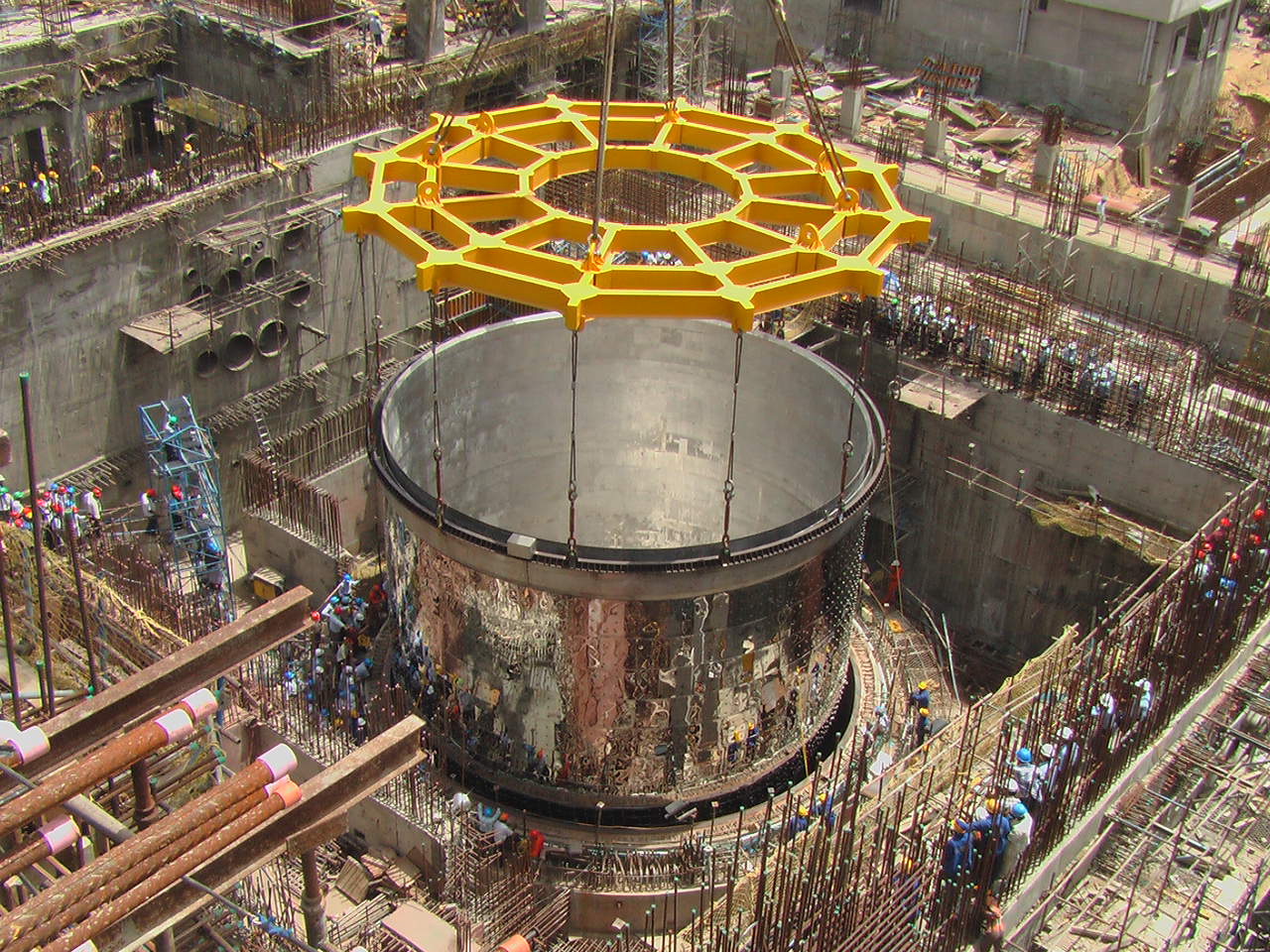
Nuclear Power Growth in India

India, being a non-signatory of the Nuclear Non-Proliferation Treaty, has been subjected to a defacto nuclear embargo from members of the Nuclear Suppliers Group (NSG) cartel. This has prevented India from obtaining commercial nuclear fuel, nuclear power plant components and services from the international market, thereby forcing India to develop its own fuel, components and services for nuclear power generation. The NSG embargo has had both negative and positive consequences for India's Nuclear Industry.

On one hand, the NSG regime has constrained India from freely importing nuclear fuel at the volume and cost levels it would like to support the country's goals of expanding its nuclear power gen- "When the agreement goes through, India is expected to generate an additional 25,000 MW of nuclear power by 2020, bringing total estimated nuclear power generation to 45,000 MW." By: Ram Kumar Pandey eration capacity to at least 20,000 MW by 2020. Also, by precluding India from taking advantage of the economies of scale and safety innovations of the global nuclear industry, the NSG regime has driven up the capital and operating costs and damaged the achievable safety potential of Indian nuclear power plants.

On the other hand, the NSG embargo has forced the Indian government and bureaucracy to support and actively fund the development of Indian nuclear technologies and industrial capacities in all key areas required to create and maintain a domestic nuclear industry. This has resulted in the creation of a large pool of nuclear scientists, engineers and technicians that have developed new and unique innovations in the areas of Fast Breeder Reactors, Thermal Breeder Reactors, the Thorium fuel cycle, nuclear fuel reprocessing and Tritium extraction & production.

Ironically, had the NSG sanctions not been in place, it would have been far more cost effective for India to import foreign nuclear power plants and nuclear fuels than to fund the development of Indian nuclear power generation technology, building of India's own nuclear reactors, and the development of domestic uranium mining, milling and refining capacity.

The Indian nuclear power industry is expected to undergo a significant expansion in the coming years thanks in part to the passing of The Indo-US nuclear deal. This agreement will allow India to carry out trade of nuclear fuel and technologies with other countries and significantly enhance its power generation capacity. when the agreement goes through, India is expected to generate an additional 25,000 MW of nuclear power by 2020, bringing total estimated nuclear power generation to 45,000 MW.

India has already been using imported enriched uranium and are currently under International Atomic Energy Agency (IAEA) safeguards, but it has developed various aspects of the nuclear fuel cycle to support its reactors. Development of select technologies has been strongly affected by limited imports. Use of heavy water reactors has been particularly attractive for the nation because it allows Uranium to be burnt with little to no enrichment capabilities.

India has also done a great amount of work in the development of a Thorium centered fuel cycle. While Uranium deposits in the nation are limited there are much greater reserves of Thorium and it could provide hundreds of times the energy with the same mass of fuel. The fact that Thorium can theoretically be utilized in heavy water reactors has tied the development of the two. A prototype reactor that would burn Uranium-Plutonium fuel while irradiating a Thorium blanket is under construction at the Madras/ Kalpakkam Atomic Power Station.

Uranium used for the weapons program has been separate from the power program, using Uranium from indigenous reserves. This domestic reserve of 80,000 to 112,000 tons of uranium (approx 1% of global uranium reserves) is large enough to supply all of India's commercial and military reactors as well as supply all the needs of India's nuclear weapons arsenal. Currently, India's nuclear power reactors consume, at most, 478 metric tonnes of uranium per year. Even if India were quadruple its nuclear power output (and reactor base) to 20GW by 2020, nuclear power generation would only consume 2000 metric tonnes of uranium per annum.

Based on India's known commercially viable reserves of 80,000 to 112,000 tons of uranium, this represents a 40 to 50 years uranium supply for India's nuclear power reactors (note with reprocessing and breeder reactor technology, this supply could be stretched out many times over). Furthermore, the uranium requirements of India's Nuclear Arsenal are only a fifteenth (1/15) of that required for power generation (approx. 32 tonnes), meaning that India's domestic fissile material supply is more than enough to meet all needs for it strategic nuclear arsenal. Therefore, India has sufficient uranium resources to meet its strategic and power requirements for the foreseeable future.

Salient Milestones of Atomic Energy in India

  March. 12, 1944 : Dr. Homi Jehangir Bhabha writes to Sir Dorabji Tata Trust for starting Nuclear Research in India 
  December 19, 1945 : Tata Institute of Fundamental Research (TIFR) Mumbai is inaugurated.
  April 15, 1948 : Atomic Energy Act is passed
  August 10, 1948 : Atomic Energy Commission is constituted
  July 29,1949 : Rare Minerals Survey Unit brought under Atomic Energy Commission and named as 'Raw Materials Division' (RMD), with Headquarters at New Delhi. In 1958, this unit becomes Atomic Minerals Division (AMD), and later in 1974, shifts to Hyderabad. It is renamed as Atomic Minerals Directorate for Exploration and Research (AMD) on July 29, 1998.
  August 18, 1950 : Indian Rare Earths Limited (IRE), owned by the Government of India and Government of Travancore, Cochine, is set up for recovering minerals, processing of rare earths compounds and Thorium - Uranium concentrates. In 1963, IRE becomes a full-fledged government undertaking under DAE
  April 1951: Uranium Deposit at Jaduguda is discovered by AMD. Drilling operations commence in December 1951.
  December 24, 1952 : Rare Earths Plant of IRE at Alwaye, Kerala, is dedicated to the nation and production of Rare Earths & Thorium - Uranium concentrate commences.
  August 03, 1954 : Department of Atomic Energy is created.
  August 01, 1955 : Thorium Plant at Trombay goes into production. Thorium Plant at Trombay is closed.
  1956 : AMD discovers uranium mineralisation at Umra, Rajasthan.
  August 04, 1956 :APSARA - first research reactor in Asia, attains criticality at Trombay, Mumbai.
  January 20, 1957 : Atomic Energy Establishment, Trombay (AEET) is inaugurated
  August 19, 1957 : AEET Training School starts functioning at Trombay.
  January 30, 1959 :Uranium Metal Plant at Trombay produces Uranium.
  February 19, 1960 : First lot of 10 Fuel Elements for CIRUS reactor, is fabricated at Trombay
  July 10, 1960 : CIRUS � the 40 MWt research reactor, attains criticality. After its successful refurbishment, the reactor was dedicated to the Nation on October 31, 2002.
  January 14, 1961 : Research Reactor ZERLINA attains criticality. (It is decommissioned in 1983).
  1965: IRE takes over operation of Mineral Processing Unit at Manavalakurichi in TamilNadu and at Chavara in Kerala.
  January 22, 1965 : Plutonium Plant is inaugurated at Trombay. � January 22, 1967 : AEET is named as Bhabha Atomic Research Centre (BARC).
  April 11, 1967 : Electronics Corporation of India Limited (ECIL) is set up at Hyderabad for producing electronic systems, instruments and components.
  June 1, 1967 : Power Projects Engineering Division (PPED), Mumbai is formed. The Division is subsequently converted to Nuclear Power Board on August 17, 1984.
  October 4, 1967: Uranium Corporation of India Limited (UCIL) is established with head quarters at Jaduguda Mines in Jharkhand (then Bihar).
  May 1968: Uranium Mill at Jaduguda, with a capacity of 1,000 TPD, commences commercial production ofMagnesium diuranate (yellow cake). Jaduguda Mine Shaft is commissioned in November
1968.
  December 31, 1968 : Nuclear Fuel Complex is set up at Hyderabad, Andhra Pradesh.
  March 12, 1969 : Reactor Research Centre (RRC) starts at Kalpakkam, Tamil Nadu. The Centre is fully established in 1971. It is named as Indira Gandhi Centre for Atomic Research (IGCAR) on December 18, 1985.
  May 01, 1969 : Heavy Water Projects is constituted at Mumbai. This later becomes Heavy Water Board.
  October 02, 1969 : Tarapur Atomic Power Station starts commercial operation.
  1970 : AMD hands over the Uranium Deposit at Narwapahar to UCIL.
  September 06, 1970 : Uranium-233 is separated from irradiated Thorium
  February 18, 1971 : Plutonium fuel for Research Reactor PURNIMA-I is fabricated at Trombay.
  1972 : AMD hands over the beach sand heavy mineral deposits of Chhatrapur, Orissa and Neendakara-Kayankulam, Kerala to IRE.
  February 3, 1972 : DAE Safety Review Committee is formed.
  May 18, 1972 : Research Reactor PURNIMA-I attains criticality.
  November 30, 1972 : Unit-1 of Rajasthan Atomic Power Station at Rawatbhatta, near Kota, Rajasthan, begins commercial operation. Unit II goes commercial on November 1, 1980.
  1974: By-product Recovery Plant of UCIL at Jaduguda is commissioned.
  May 18, 1974 : Peaceful underground Nuclear Experiment is conducted at Pokhran, Rajasthan.
  March 1975 : Commercial production of Uranium Mineral Concentrates from Copper plant tailings at Surda, Hindustan Copper Limited commenced.
  May 1975 : Commercial production of by-products -Molybdenumand Copper concentrates starts.
  September 1975 : Surda Uranium Recovery Plant of UCIL is commissioned.
  June 16, 1977 : Variable Energy Cyclotron becomes operational at Kolkata.
  1978 : High-sensitivity airborne spectrometric and magneto metric surveys started.
  1979 : AMD hands over Bhatin and Turamdih (East) uranium deposits (now in Jharkhand State) to UCIL.
  Nov 18, 1979 : Plutonium-Uranium Mixed Oxide (MoX) fuel is fabricated at Trombay.
  November 19, 1982 : BARC's Power Reactor Fuel Reprocessing Plant at Tarapur is commissioned.
  1983 : Fbtr attains first criticality.
  February 1983 : Rakha Uranium Recovery Plant of UCIL is commissioned.
  November 15, 1983 : Atomic Energy Regulatory Board (AERB) in Mumbai is constituted.
  1984 : Sandstone-type uranium deposit at Domiasiat, Meghalaya is discovered.
  January 27, 1984 : Madras Atomic Power Station - Unit I at Kalpakkam starts commercial operation. Unit II goes commercial on March 21, 1986.
  February 19, 1984 : Centre for Advanced Technology (CAT) at Indore (Madhya Pradesh) is inaugurated.
  March 08, 1984 : Plutonium - Uranium mixed Carbide Fuel for Fast Breeder Test Reactor (FBTR) is fabricated at Trombay.
  May 10, 1984 : Research Reactor PURNIMAII, a Uranium-233 fuelled homogenous reactor, attains criticality.
  1985 : AMD hands over the Bodal uranium deposit to UCIL.
  March 05, 1985 : Waste Immobilisation Plant (WIP) at Tarapur is commissioned. August 08, 1985 : Research Reactor DHRUVA (100 MWt) attains criticality. It attains full power on January 17, 1988. October 18, 1985 : FBTR at IGCAR attains criticality.
  1986 : Dredge Mining, Mineral Separation and Synthetic Rutile Plant at OSCOM, Chhatrapur, Orissa is commissioned by IRE. HERO Project at Alwaye, Kerala, is commissioned. Production is started at OSCOM.
  October 1986 : Bhatin Mine is commissioned by UCIL and the ore is transported to Jaduguda mill for processing.
  December 1986 : Mosaboni Uranium Recovery Plant of UCIL is commissioned.
  1987 : AMD hands over Turamdih (West) uranium deposits to UCIL, and beach sand deposits in Tamil Nadu to IRE.
  September 17, 1987 : Nuclear Power Corporation of India Limited (NPCIL) is formed by converting the erstwhile Nuclear Power Board.
  1988 : AMD hands over the Kuttumangalam and Vettumadia sand deposits, Tamil Nadu to IRE.
  December 30, 1988 : 12 MV Pelletron Accelerator is inaugurated in Mumbai. The accelerator is a joint endeavour of BARC & TIFR.
  1989 : AMD Training School is inaugurated. Board of Radiation and Isotope Technology (BRIT) is constituted.
  January 3, 1989 : Regional Radiation Medicine Centre (RRMC) is inaugurated at Kolkata.
  March 12, 1989 : Narora Atomic Power Station Unit I attains criticality. Its Unit II attains criticality on October 24, 1991.
  1990 : Dolostone -hosted uraniummineralisation in the western margin of Cuddapah basin is discovered. Mineral Research Development Centre (MRDC) of IRE is launched at Kollam. HERO Plant is commissioned at Alwaye. Dredge & Wet Concentrator Plant at Chavara, Kerala, is commissioned.
  November 09, 1990 : Research Reactor PURNIMA-III, a Uranium-233 fuelled reactor, attains criticality.
  1991: AMD discovers uranium mineralisation at Lambapur, Nalgonda district, Andhra Pradesh and produces upgraded xenotime concentrate at 'Pre-concentrate Upgradation Plant' (PUP) at Kunkuri.
  May 16, 1991: First ECR heavy ion source of the country becomes operational at the Variable Energy Cyclotron Centre.
  1992 : First remotely operated radiography camera is launched. Significant heavy mineral concentration along the East Coast, Andhra Pradesh, is identified. New Thorium Plant at OSCOM, Chhattrapur, Orissa is commissioned by IRE.
  September 03, 1992 : Kakrapar Atomic Power Station - Unit I attains criticality. Its Unit II attains criticality on January 08, 1995
  1993 : BARC supplies one millionth radioisotope consignment.
  1995 : Research Irradiator Gamma Chamber 5000 is launched by BRIT.
  January 1995 : Narwapaharmine is inaugurated.
  1996 : 30kWt Kamini Reactor attains criticality. The reactor is taken to full power in September, 1997.
  March 27, 1996 : Kalpakkam Reprocessing Plant (KARP) is cold commissioned. KARP is dedicated to the nation on September 15,1998.
  October 20, 1996 : Kalpakkam Mini Reactor (KAMINI), with Uranium-233 fuel, attains criticality at IGCAR, Tamilnadu.
  1997 : AMD discovers of uraniummineralisation in brecciated limestone at Gogi, Gulbarga district, Karnataka in the Bhima basin. Microzir Plant is commissioned in Chavra, Kerala.
  March. 31, 1997 : Rajasthan Atomic Power Station Unit-1 is re-commissioned.
  December 1997: Jaduguda Mill is expanded to treat 2,090 tonnes ore per day. PRYNCE (95% NeodymiumOxide) Plant is commissioned at Rare Earths Division.
  May 11 & 13, 1998 : Five underground nuclear tests are conducted at Pokhran Range, Rajasthan.
  May 27, 1998 : Rajasthan Atomic Power Station Unit-2 is re-commissioned after enmasse replacement of coolant channels.
  August 10, 1998 : The 500 keV industrial electron accelerator developed indigenously by the BARC is commissioned for its first phase of operation. Ammonium diuranate (ADU) production commences at Rare Earths Division of IRE at Alwaye, Kerala.
  April 22, 1999 : 450 MeV Synchrotron Radiation Source Indus-1 achieves electron beam current of 113 milli-ampere superceding the design value of 100 milli-ampere.
  July 1999 : Solid Storage and Surveillance Facility (S3F) is commissioned at Tarapur. September 24, 1999 : Unit-2 of Kaiga Atomic Power Station attains criticality. It is synchronised to the grid on December 02, 1999, and becomes commercial on March 16, 2000.
  December 24, 1999 : Unit-3 of Rajasthan Atomic Power Station attains criticality. It is synchronised to the grid on March 10, 2000, and becomes commercial on June 2, 2000.
  January 1, 2000 : BRIT's Radiation Processing Plant at Vashi, Navi Mumbai is commissioned. 2000 : Boron Enrichment Plant is commissioned at IGCAR, Kalpakkam.
  March 8, 2000 : Tarapur Atomic Power Project �3&4 rises up.
  March, 2000 & May 2000 : First concrete pour of Unit-3 and Unit-4 of Tarapur Atomic Power Project-3 & 4.
  April 21, 2000 : Folded Tandem Ion Accelerator (FOTIA) at Trombay delivers first beamon target.
  September 26, 2000 : Unit-1 of Kaiga Atomic Power station attains criticality. It synchronises to the grid on October 12, 2000.
  November 03, 2000 : Unit-4 of Rajasthan Atomic Power station attains criticality. It creates history by synchronising with the grid within a period of 14 days on November 17, 2000. The unit becomes commercial on December 23, 2000.
  November 16, 2000 : Unit - 1 of Kaiga Atomic Power Station becomes commercial. 2001 : FBTR fuel reaches burn up of 100,000MWd/ T.
  March 18, 2001: Units 3& 4 of Rajasthan Atomic Power Stations dedicated to the nation.
  February 12, 2002 : India signs the biggest contract with the Russian Federation for the Nuclear Power Station at Kudankulam, Tamil Nadu. March
  30 & May 10, 2002 : First pours of concrete respectively of Unit-3 and Unit-4 of Kaiga Atomic Power Project 3 & 4.
  March 31, 2002 : First pour of concrete of Units 1&2 of Kudankulam Atomic Power Project.
  September 18, 2002 : First pour of concrete of Unit-5 of Rajasthan Atomic Power Project 5 & 6
  October 31, 2002 :Waste Immobilisation Plant and Uranium-Thorium Separation Plant at (both at Trombay), and the Radiation Processing Plant Krushak at Lasalgaon, district Nasik, Maharashtra, are dedicated to the Nation.
  November 2002 : UCIL's Turamdih Mine, Jharkhand is inaugurated and Technology Demonstration Pilot Plant becomes operational at Jaduguda.
  2003 : 1.7 MeV Tandetron Accelerator and the demo facility LeadMini Cell (LMC), for reprocessing of FBTR carbide fuel on lab scale, are commissioned at IGCAR.
  06-March-2005 : India's first 540MWe Nuclear Power Reactor Tarapur Unit 4 Attains Criticality.
  04-June-2005 : TAPS 4 synchronised to the grid
Monday, July 25, 2011

Time Management

Time management


Developing time management skills is a journey
that may begin with this Guide, but needs practice and other guidance along the way.
One goal is to help yourself become aware of how you use your time
as one resource in organizing, prioritizing, and succeeding in your studies
in the context of competing activities of friends, work, family, etc.
First: try our exercise in time management:
How do you spend your time each day?
Strategies on using time:
These applications of time management have proven to be effective as good study habits.
As we go through each strategy, jot down an idea of what each will look like for you:
  • Blocks of study time and breaks
    As your school term begins and your course schedule is set, develop and plan for, blocks of study time in a typical week. Blocks ideally are around 50 minutes, but perhaps you become restless after only 30 minutes? Some difficult material may require more frequent breaks. Shorten your study blocks if necessary-but don't forget to return to the task at hand! What you do during your break should give you an opportunity to have a snack, relax, or otherwise refresh or re-energize yourself. For example, place blocks of time when you are most productive: are you a morning person or a night owl?
    • Jot down one best time block you can study. How long is it? What makes for a good break for you? Can you control the activity and return to your studies?
  • Dedicated study spaces
    Determine a place free from distraction (no cell phone or text messaging!) where you can maximize your concentration and be free of the distractions that friends or hobbies can bring! You should also have a back-up space that you can escape to, like the library, departmental study center, even a coffee shop where you can be anonymous. A change of venue may also bring extra resources.
    • What is the best study space you can think of? What is another?
  • Weekly reviews
    Weekly reviews and updates are also an important strategy. Each week, like a Sunday night, review your assignments, your notes, your calendar. Be mindful that as deadlines and exams approach, your weekly routine must adapt to them!
    • What is the best time in a week you can review?
  • Prioritize your assignments
    When studying, get in the habit of beginning with the most difficult subject or task. You'll be fresh, and have more energy to take them on when you are at your best. For more difficult courses of study, try to be flexible: for example, build in reaction time when you can get feedback on assignments before they are due.
    • What subject has always caused you problems?
  • Achieve "stage one"--get something done!
    The Chinese adage of the longest journey starting with a single step has a couple of meanings: First, you launch the project! Second, by starting, you may realize that there are some things you have not planned for in your process. Details of an assignment are not always evident until you begin the assignment. Another adage is that "perfection is the enemy of good", especially when it prevents you from starting! Given that you build in review, roughly draft your idea and get going! You will have time to edit and develop later.
    • What is a first step you can identify for an assignment to get yourself started?

  • Postpone unnecessary activities until the work is done!
    Postpone tasks or routines that can be put off until your school work is finished!
    This can be the most difficult challenge of time management. As learners we always meet unexpected opportunities that look appealing, then result in poor performance on a test, on a paper, or in preparation for a task. Distracting activities will be more enjoyable later without the pressure of the test, assignment, etc. hanging over your head. Think in terms of pride of accomplishment. Instead of saying "no" learn to say "later".
    • What is one distraction that causes you to stop studying?
  • Identify resources to help you
    Are there tutors? An expert friend? Have you tried a keyword search on the Internet to get better explanations? Are there specialists in the library that can point you to resources? What about professionals and professional organizations. Using outside resources can save you time and energy, and solve problems.
    • Write down three examples for that difficult subject above?
      Be as specific as possible.
  • Use your free time wisely
    Think of times when you can study "bits" as when walking, riding the bus, etc. Perhaps you've got music to listen to for your course in music appreciation, or drills in language learning? If you are walking or biking to school, when best to listen? Perhaps you are in a line waiting? Perfect for routine tasks like flash cards, or if you can concentrate, to read or review a chapter. The bottom line is to put your time to good use.
    • What is one example of applying free time to your studies?
  • Review notes and readings just before class
    This may prompt a question or two about something you don't quite understand, to ask about in class, or after. It also demonstrates to your teacher that you are interested and have prepared.
    • How would you make time to review?
      Is there free time you can use?
    • Review lecture notes just after class
      Then review lecture material immediately after class.
      The first 24 hours are critical. Forgetting is greatest within 24 hours without review!
      • How would you do this?
        Is there free time you can use?
    Select one of the ten applications above. and develop a new study habit! Try something you have a good chance of following through and accomplishing. Nothing succeeds like a first successful try! Try the University of Minnesota's Assignment Calculator Develop criteria for adjusting your schedule to meet both your academic and non-academic needs Effective aids:
    • Create a simple "To Do" listThis simple program will help you identify a few items, the reason for doing them, a timeline for getting them done, and then printing this simple list and posting it for reminders.
    • Daily/weekly planner
      Write down appointments, classes, and meetings on a chronological log book or chart.
      If you are more visual, sketch out your schedule
      First thing in the morning, check what's ahead for the day
      always go to sleep knowing you're prepared for tomorrow
    • Long term planner
      Use a monthly chart so that you can plan ahead.
      Long term planners will also serve as a reminder to constructively plan time for yourself

Friday, July 8, 2011

Indian Economy - BANKING IN INDIA

BANKING IN INDIA

Overview

  • Organized banking in India originated in the late 18th century
  • The State Bank of India, headquartered in Mumbai, is the largest bank in India
  • Currently, India has 88 Scheduled Banks – 27 public sector banks, 31 private banks and 38 foreign banks
  • The public sector banks hold over 75% of banking assets in the country, followed by private banks (18.2%) and foreign banks (6.5%)
  • Central banking in India is the responsibility of the Reserve Bank of India
  • Banking in India is the responsibility of the Department of Financial Services, Ministry of Finance
  • Currently there are 170 scheduled commercial banks, which includes 91 regional rural banks, 19 nationalised banks, 8 banks in the SBI group and the IDBI
  • There are 4 non-scheduled commercial banks in the country
Keywords: IAS, IAS Exam, IAS Study Material, UPSC, UPSC Question Papers, India, Civil Service, General Studies, Free

History of banking in India

  • The oldest banks in India were the General Bank of India and the Bank of Hindustan, both founded in 1786. However both banks are now defunct
  • The oldest existing bank in India is the State Bank of India. The origins of the SBI go back to the Bank of Calcutta (founded 1806, renamed Bank of Bengal in 1809)
  • The Bank of Madras was established in 1843 and the Bank of Bombay in 1868
  • The Bank of Bengal, Bank of Bombay and Bank of Madras merged to form the Imperial Bank of India in 1921. The Imperial Bank of India was renamed the State Bank of India in 1955. Although a normal commercial bank, the Imperial Bank of India also functioned as a central governmental until 1935
  • The Reserve Bank of India was established in 1935
  • The oldest joint stock bank is the Allahabad Bank, established in 1865.
  • The first entirely Indian joint stock bank was the Oudh Commercial Bank (Faizabad, 1881). However, it failed in 1958. The next oldest is the Punjab National Bank (Lahore, 1895)
  • The Dakshina Kannada and Udipi districts of Karnataka (called South Canara), is known as the Cradle of Indian Banking
Keywords: IAS, IAS Exam, IAS Study Material, UPSC, UPSC Question Papers, India, Civil Service, General Studies, Free

Nationalisation of banks

  • The Government of India nationalised 14 of the largest banks in 1969
  • This achieved by an ordinance to the effect in July 1969. This was formalized by the Banking Companies (Acquisition and Transfer of Undertaking) Bill 1969
  • The banks that were nationalized in 1969 were: Allahabad Bank, Bank of Baroda, Bank of India, Bank of Maharastra, Canara Bank, Central Bank of India, Dena Bank, Indian Bank, Indian Overseas Bank, Punjab National Bank, Syndicate Bank, UCO Bank, Union Bank of India and United Bank of India
  • In 1980, six more banks were nationalized. The banks that were nationalized in 1980 were: Andhra Bank, Corporation Bank, Oriental Bank of Commerce, Punjab and Sind Bank, New Bank of India and Vijaya Bank
  • In 1993, the New Bank of India was merged with Punjab National Bank. There are 19 nationalized banks in operation today
  • Following this, the GoI controlled about 91% of the banking business in India
Keywords: IAS, IAS Exam, IAS Study Material, UPSC, UPSC Question Papers, India, Civil Service, General Studies, Free

RESERVE BANK OF INDIA
Overview

  • The Reserve Bank of India is the central bank of India
  • It was established in 1935 and nationalised in 1949. Its headquarters was initially Calcutta, but moved to Bombay in 1937. It is currently headquartered in Mumbai.
  • The first Governor of the RBI was Sir Osborne Smith. The current Governor of the RBI is Dr. Duvvuri Subbarao
  • The RBI functions under the provisions of the Reserve Bank of India Act 1934
Keywords: IAS, IAS Exam, IAS Study Material, UPSC, UPSC Question Papers, India, Civil Service, General Studies, Free

Objectives

  • Maintain price stability
  • Ensure adequate flow of credit
  • Protect depositor’s interests
  • Provide cost-effective banking services to the public
  • Facilitate external trade and payment
  • Promote development of foreign exchange market in India
  • Provide supplies of currency notes and coins in the country
Keywords: IAS, IAS Exam, IAS Study Material, UPSC, UPSC Question Papers, India, Civil Service, General Studies, Free

Functions

  • Formulates, implements and monitors monetary policies
  • Regulates operations of banking and financial services sector in the country
  • Manages the Foreign Exchange Management Act 1999
  • Issues, exchanges and destroys currency notes and coins
  • Perform promotional functions to support national objectives
  • Acts as banker to banks by maintaining accounts of all scheduled banks
  • Acts as banker to the Central and state governments
Keywords: IAS, IAS Exam, IAS Study Material, UPSC, UPSC Question Papers, India, Civil Service, General Studies, Free

List of RBI Governors

S. No. Governor Tenure Notes
1 Sir Osborne Smith 1935-1937 First Governor of the RBI
Did not sign any bank notes
2 Sir James Taylor 1937-1943 Governor during WWII
Started the practice of signing bank notes
3 Sir C D Deshmukh 1943-1949 First Indian Governor of RBI
Oversaw Independence & Partition

Represented India at the Bretton Woods Conference 1944

Served as Minister of Finance 1950-1956
4 Sir Benegal Rama Rao 1949-1957 Longest serving Governor
Was Indian Ambassador to USA prior to RBI

Witnessed commencement of Five Year Plans, and transformation of Imperial Bank of India to SBI
5 K G Ambegaonkar Jan 1957 – Feb 1957 Did not sign any bank notes
6 H V R Iyengar 1957-1962 Witnessed introduction of decimal coinage
Variable cash reserve ration (CRR) introduced
7 P C Bhattacharya 1962-1967
8 L K Jha 1967-1970 Witnessed nationalization of banks (1969)
Appointed as Ambassador to US in 1970
9 B N Adarkar May 1970 – June 1970 Served as India’s Executive Director at the IMF
10 S Jagannathan 1970-1975 Witnessed oil shock, expansion of banking services, shift to floating rates
Relinquished office to serve as Executive Director at IMF
11 N C Sen Gupta May 1975 – Aug 1975
12 K R Puri 1975-1977
13 M Narasimhan May 1977 – Nov 1977 Only Governor to be appointed from the Reserve Bank cadre
Chairperson of Committee on Financial System (1991) and Committee on Banking Sector Reforms (1998)

Served as Executive Director for India at the World Bank and the IMF
14 Dr. I G Patel 1977-1982 Served as Secretary at the United Nations Development Programme (UNDP)
Witnessed demonetisation of high denomination bank notes and “gold auctions”

Witnessed nationalization of six banks (1980)

Secured IMF’s Extended Fund Facility (1981). This was the largest arrangement of the IMF at the time
15 Dr. Manmohan Singh 1982-1985 Witnessed comprehensive legal reforms in banking sector
16 A Ghosh Jan 1985 – Feb 1985
17 R N Malhotra 1985-1990 Served as Executive Director of IMF prior to RBI
Made efforts to develop money markets
18 S Venkitaraman 1990-1992 Managed balance of payments crisis
Adopted IMF’s stabilisation programme

Supervised devaluation of the Rupee

Witnessed launch of economic reforms
19 Dr. C Rangarajan 1992-1997 Ushered in unprecedented central bank activism
Introduced comprehensive measures to strengthen and improve efficiency of banking sector

Establishment of unified exchange rate

Cap on automatic finance by the Bank to the Government
20 Dr. Bimal Jalan 1997-2003 Represented India on the Executive Boards of the IMF and World Bank prior to RBI
21 Dr Y V Reddy 2003-2008 Executive Director to IMF prior to RBI
22 Dr. D Subbarao 2008-Present Prior to RBI, he has been
  • Secretary to the PM’s Economic Advisory Council (2005-2007)
  • Lead economist in the World Bank (1999-2004)
  • Finance Secretary to the Government of Andhra Pradesh (1993-1998)
  • Joint Secretary, Dept. of Economic Affairs (1988-1993)
Keywords: IAS, IAS Exam, IAS Study Material, UPSC, UPSC Question Papers, India, Civil Service, General Studies, Free

STATE BANK OF INDIA
  • The State Bank of India is derived from the Imperial Bank of India (1921), which was nationalised in 1955
  • The State Bank of India is the oldest bank in India. It traces its ancestry to the Bank of Calcutta, founded in 1806.
  • It is headquartered in Mumbai
  • The State Bank of India is also the largest bank in India. It has a market share of about 20% in deposits and advances
  • The State Bank Group consists of the SBI and its subsidiary banks viz. State Bank of Indore, State Bank of Bikaner & Jaipur, State Bank of Hyderabad, State Bank of Mysore, State Bank of Patiala, State Bank of Travancore
  • The SBI is one of the Big Four Banks in India, along with ICICI Bank, Axis Bank and HDFC Bank
  • The SBI was ranked as the 29th most reputable company in the world by Forbes in 2009
Keywords: IAS, IAS Exam, IAS Study Material, UPSC, UPSC Question Papers, India, Civil Service, General Studies, Free

CATEGORIES OF BANKS IN INDIA
Structure of banking in India. Number of banks given in brackets
  • Commercial Banks
    • Commercial banks are those that cater to the regular banking and financial needs of the public
    • Commercial banks include public sector banks and private sector banks. Public sector banks include the State Bank Group and other nationalised banks, while private sector banks include Indian banks and foreign banks
  • Cooperative Banks
    • Cooperative banking is retail and commercial banking organised on a cooperative basis. Cooperative banks include credit unions, savings and loans associations and building societies and cooperatives
    • Cooperative banks operate on the principles of cooperation – mutual help, democratic decision making and open membership
    • They are governed by controls of the RBI as well as state governments. Cooperative banks in general operate under the Cooperative Credit Societies Act 1904, but large Urban Cooperative Banks operate under the Banking Regulation Act 1949
    • Cooperative banks in India are the primary financiers of agricultural activities, small scale industries and self-employed workers
    • Cooperative banks in India were first established in the late 19th century, following the success of such banks in Britain and Germany
    • The Anyonya Cooperative Bank Ltd. (ABCL) was the first cooperative bank in India. It was established Vithal Laxman (aka Bhausaheb Kavthekar) in 1889 under the name Anyonya Sahayakari Mandali Cooperative Bank Ltd. The bank closed functioning in March 2008 following an order by the RBI. Re-opening is under consideration
  • Regional Rural Banks
    • Regional Rural Banks (RRBs) were first established in 1975
    • Initially five RRBs were established at Moradabad (UP), Gorapkhpur (UP), Bhiwani (Haryana), Jaipur (Rajasthan), Malda (WB). Currently there are 91 RRBs
    • RRBs exist in all states except Goa and Sikkim
    • The share of RRBs in agricultural credit is around 5%
  • Scheduled Banks
    • Scheduled Banks are those banks that have been included in Second Schedule of the RBI Act 1934
    • Scheduled Banks must fulfil two conditions
      • The paid up capital and collected funds of the bank must not be less than Rs 5 lakhs
      • Any activity of the bank should not adversely affect the interest of deposition
    • Scheduled Banks enjoy the following benefits
      • They are eligible for obtaining loans on Bank Rate from the RBI
      • They acquire membership of the clearing house
    • Scheduled Banks include commercial banks, cooperative banks and regional rural banks
    • There are around 302 Scheduled Banks in operation
  • Non-Scheduled Banks
    • Non-Scheduled Banks are those that are not included in the list of Scheduled Banks
    • They have to follow the Cash Reserve Ratio (CRR) condition. However, they are not compelled to deposit these funds with the RBI
    • They can avail loans from the RBI only under emergencies, and not for daily activities
    • There are only 4 Non-Scheduled Banks in operation
Keywords: IAS, IAS Exam, IAS Study Material, UPSC, UPSC Question Papers, India, Civil Service, General Studies, Free

GOVERNMENT ENTITIES IN BANKING
  1. Small Industries Development Bank of India (SIDBI)
    1. Established in 1990, headquarters Lucknow
    2. The main objective of the SIDBI is to aid the growth and development of micro, small and medium scale industries in India
    3. It provides direct credit to micro, small and medium enterprises, supports microfinance institutions and refinancing to state level finance bodies
  2. Industrial Development Bank of India (IDBI)
    1. Established in 1964, headquarters Mumbai
    2. The IDBI is the tenth largest development bank in the world. It is one of India’s largest public sector bank
    3. Its main objective is to provide credit and other banking facilities to industries in India
    4. However, in 2004 the IDBI was re-designated as a commercial bank, following the Industrial Development Bank (Transfer of Undertaking and Repeal) Act 2003, and renamed IDBI Ltd
    5. Following this, the commercial banking division, IDBI Bank was merged into IDBI
  3. Industrial Finance Corporation of India (IFCI)
    1. The IFCI is the first development finance institution in the country to cater to the needs of Indian industry
    2. Established 1948, headquarters New Delhi
    3. The IFCI was established to provide long term low interest credit to corporate borrowers
    4. In 1993, the IFCI was re-registered as a commercial company under the Indian Companies Act 1956, and renamed IFCI Ltd
  4. National Bank for Agricultural and Rural Development (NABARD)
    1. Partly owned by the RBI
    2. Established 1982, headquarters Mumbai
    3. NABARD serves as the apex development bank in India for economic activities in rural areas
    4. The main objective of NABARD is to facilitate credit flow for agriculture and small scale industries
    5. NABARD provides refinance to State Cooperative Agriculture and Rural Development Banks (SCARDBs), State Cooperative Banks (SCBs), Regional Rural Banks (RRBs), Commercial Banks and other financial institutions approved by the RBI
    6. NABARD coordinates the rural financing activities of all institutions engaged in developmental work
    7. NABARD has 28 regional offices (state capitals), one Sub Office (in Port Blair) and one Special Cell (in Srinagar)
    8. NABARD is famous for its Self Help Group (SHG) Bank Linkage Programme, which serves as an important tool for microfinance
  5. National Housing Bank (NHB)
    1. Wholly owned subsidiary of the RBI
    2. Established in 1987, headquarters New Delhi
    3. Established mainly to provide long term finance to individual households
  6. Export-Import Bank of India (EXIM Bank)
    1. Established 1981, headquarters Mumbai
    2. The main objective of the EXIM Bank is to provide financial assistance to exporters and importers with a view to promoting the country’s international trade
    3. It acts as the apex financial institution for financing foreign trade in India
  7. Bharatiya Reserve Bank Note Mudran Private Ltd (BRBNMPL)
    1. Wholly owned subsidiary of the RBI
    2. Established in 1995, headquarters Bangalore
    3. Main function is to augment the product of bank notes to meet demand
    4. The company manages two presses: Mysore and Salboni (West Bengal)
  8. Deposit Insurance and Credit Guarantee Corporation (DICGC)
    1. Wholly owned subsidiary of the RBI
    2. Established in 1962, headquarters Mumbai
    3. India was one of the first countries to provide deposit insurance
    4. Main objective is to provide insurance to depositors against collapse and bankruptcy of banks
    5. Provides deposit insurance coverage up to Rs 100,000

Indian Economy - INSURANCE IN INDIA

INSURANCE IN INDIA

Overview

  • The first insurance company in India was the Oriental Life Insurance Company, founded in Calcutta 1818. However, it is now defunct
  • The first Indian insurance company was the Bombay Mutual Life Assurance Society, founded 1870
  • The oldest existing insurance company is the National Insurance Company, founded 1906
  • Insurance was nationalised in 1956 and then opened up to private sector in 1999.
  • Currently the government allows 26% FDI in the insurance sector
  • The largest life insurance company in India is the Life Insurance Corporation
  • Insurance falls under the purview of the Department of Financial Services, Ministry of Finance
  • IAS, IAS Exam, IAS Study Material, UPSC, UPSC Question Papers, India, Civil Service, General Studies, Free
Nationalisation of insurance

  • Life insurance in India was nationalised by the Life Insurance Corporation Act 1956
  • All 245 life-insurance companies in India at the time were merged to form the Life Insurance Corporation (LIC).
  • The General Insurance Business Act 1972 nationalised general insurance companies
  • The existing 100 general insurance companies were amalgamated into the General Insurance Corporation of India (GIC).
  • IAS, IAS Exam, IAS Study Material, UPSC, UPSC Question Papers, India, Civil Service, General Studies, Free
GOVERNMENT BODIES IN INSURANCE
All government bodies in insurance function under the Ministry of Finance unless otherwise noted
Life Insurance Corporation (LIC)

  • Established 1956, headquarters Mumbai
  • The LIC is the largest life insurance company in India and also the nation’s largest investor
  • It funds close to 25% of the government’s expenses
  • The LIC owns the following subsidiaries
    • Life Insurance Corporation of India International: provides USD denominated policies to NRIs
    • LIC Nepal
    • LIC Lanka
    • LIC Housing Finance
  • IAS, IAS Exam, IAS Study Material, UPSC, UPSC Question Papers, India, Civil Service, General Studies, Free
General Insurance Corporation (GIC)

  • Established 1972, headquarters Mumbai
  • The GIC is a holding company for four subsidiary companies
    • Oriental Insurance Company Ltd (New Delhi)
    • New India Assurance Company Ltd (Mumbai)
    • National Insurance Corporation Ltd (Kolkata)
    • United India Insurance Company Ltd (Chennai)
  • The GIC is the sole re-insurance company in India
  • The GIC covers insurance for the entire spectrum of the economy from shoes to aircraft, from agricultural wells to oil wells, from chemical manufactures to satellite launches etc
  • IAS, IAS Exam, IAS Study Material, UPSC, UPSC Question Papers, India, Civil Service, General Studies, Free
Insurance Regulatory and Development Authority (IRDA)

  • Established 2000, headquarters Hyderabad
  • The IRDA was set up to protect the interests of policy holders, and to regulate the growth of the insurance industry
  • Some of the functions of the Authority include
    • Regulate investment of funds by insurance companies
    • Regulate maintenance of margin of solvency
    • Adjudicate disputes between insurers and intermediaries
  • IAS, IAS Exam, IAS Study Material, UPSC, UPSC Question Papers, India, Civil Service, General Studies, Free
Agriculture Insurance Company (AIC)

  • Established 2003, headquarters New Delhi
  • The AIC is promoted by the GIC and NABARD
  • The AIC is under administrative control of Ministry of Finance, but under operative control of Ministry of Agriculture
  • The AIC offers area based and weather crop insurance schemes to farmers
  • It is one of the largest agriculture insurance companies in the world
  • IAS, IAS Exam, IAS Study Material, UPSC, UPSC Question Papers, India, Civil Service, General Studies, Free
POLICIES AND PROGRAMMES
Social Security Scheme

  • A Social Security Fund (SSF) was set up in 1988-89 for providing social security through group insurance schemes to the weaker sections of society
  • The SSF is administered by the LIC
  • The SSF provides up to Rs 5000 on death from natural causes and Rs 25,000 upon death/disability due to accident
  • IAS, IAS Exam, IAS Study Material, UPSC, UPSC Question Papers, India, Civil Service, General Studies, Free
Janashree Bima Yojana (JBY)

  • The Janashree Bima Yojana was launched in 2000
  • The JBY is a group insurance scheme. The minimum membership of the group should be 25 persons
  • The JBY is administered by the LIC
  • The JBY provides for insurance protection to rural and urban poor. The scheme covers BPL people and above poverty line people who belong to certain identified occupational groups
  • The scheme provides for cover of Rs 20,000 on natural death. The scheme also provides pension of Rs 200
  • IAS, IAS Exam, IAS Study Material, UPSC, UPSC Question Papers, India, Civil Service, General Studies, Free
Aam Aadmi Bima Yojana (AABY)

  • Launched in 2007
  • Provides insurance to the head of the family of rural landless households
  • Covers natural death and accidental death/disability
  • The scheme also provides additional benefit of scholarships for max two children between 9th and 12th standards
  • Administered by the LIC
  • IAS, IAS Exam, IAS Study Material, UPSC, UPSC Question Papers, India, Civil Service, General Studies, Free
Universal Health Insurance Scheme (UHIS)

  • The UHIS is meant to improve access of health care to poor families
  • Scheme provides for reimbursement of medical expenses, death and compensation due to loss of earning capacity
  • The UHIS targets only BPL families
  • IAS, IAS Exam, IAS Study Material, UPSC, UPSC Question Papers, India, Civil Service, General Studies, Free
National Agriculture Insurance Scheme (NAIS)

  • Launched in 1999
  • Protects farmers against losses due to natural calamities such as flood, drought, pestilence etc
  • Scheme is implemented by the Agriculture Insurance Company (AIC)
  • The Scheme is available to all farmers irrespective of the size of their land holdings
  • The Scheme covers all food crops and oil seeds. It also covers some commercial and horticultural crops
  • The scheme has until now covered more than 1.3 million farmers and 211 million hectares of land
IAS, IAS Exam, IAS Study Material, UPSC, UPSC Question Papers, India, Civil Service, General Studies, Free

Pilot Weather Based Crop Insurance Scheme (WBCIS)

  • Launched in 2007, on a pilot basis
  • The WBCIS aims to cover farmers against anticipated crop failure due to adverse weather conditions
  • The scheme is based on the fact that weather parameters can affect crop yield even when the farmer has taken all care to ensure a good harvest
  • The payouts are based on historical data that determine weather thresholds/triggers beyond which crop losses are expected
  • The WBCIS is implemented by the AIC
  • The scheme is currently being implemented on 30 major crops including horticultural crops
  • Currently the scheme covers more than 110,000 farmers and 1.4 million hectares of land

Sunday, May 8, 2011

Indian Economics - FINANCIAL MARKETS IN INDIA

Overview

  • India’s financial market is one of the oldest in the world
  • It is considered the fastest growing and strongest among emerging economies
  • Financial markets in India are under the purview of the Capital Markets Division of the Department of Economic Affairs of the Ministry of Finance
  • The markets in India are regulated by the Securities and Exchange Board of India (SEBI)
  • The PAN is the sole identification number for all transactions in securities markets
  • Although there are more than 25 stock exchanges in the country, the Bombay Stock Exchange and the National Stock Exchange account for a large majority of securities exchanges
 
GOVERNMENTAL REGULATORY BODIES
Securities and Exchange Board of India (SEBI)

  • Established 1992, headquarters Mumbai
  • Functions under the Department of Economic Affairs, Ministry of Finance
  • SEBI is the regulator for financial markets in India
  • SEBI has regional offices in New Delhi, Kolkata, Chennai and Ahmadabad
  • The main responsibilities of SEBI include protection of interests of investor, and the development and regulation of securities markets
  • SEBI has three main functions
    • Legislative functions: it drafts regulations and policies for financial markets
    • Executive functions: conducts investigations and enforces action
    • Judicial functions: passes rulings and orders and arbitrates disputes
Forward Markets Commission (FMC)

  • Established 1953, headquarters Mumbai
  • Functions under the Ministry of Consumer Affairs, Food and Public Distribution
  • The FMC is the chief regulator of forwards and futures markets in India
  • The main functions of the FMC include
    • Advice the Union Government on matters relating to forward markets
    • To monitor and regulate forward markets
    • Collect and publish information relating to forward markets
  • The FMC currently allows futures trading in specific spices, edible oils, pulses, energy products and metals
  • These forwards and futures exchanges in commodities are performed at specialised commodity exchanges in the country
IMPORTANT STOCK EXCHANGES IN INDIA
Bombay Stock Exchange (BSE)

  • Established 1875, location Mumbai
  • The BSE is the oldest stock exchange in Asia
  • The BSE is the largest stock exchange in India (in terms of market capitalization)
  • In terms of the number of listed companies, the BSE is the largest stock exchange in the world (with over 4500 listed companies)
  • The key index of the BSE is the SENSEX (BSE Sensitive Index). It is a composite measure of the performance of 30 key listed companies

National Stock Exchange (NSE)

  • Established 1992, location Mumbai
  • The NSE is the second largest stock exchange in India (after BSE)
  • In terms of number of trades in equity, it is the largest stock exchange in India and the third largest in the world
  • The NSE is also the second fastest growing stock exchange in the world
  • The NSE is owned by a set of financial institutions, banks and insurance companies. There are at least two foreign investors in NSE: NYSE Euronext and Goldman Sachs
  • The NSE’s key index is the Nifty