Showing posts with label PREPARATION NOTES. Show all posts

Monday, March 28, 2011

General Studies - RECENT NOTEWORTHY DEVELOPMENTS

RECENT NOTEWORTHY DEVELOPMENTS

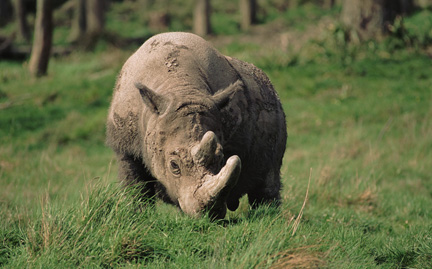
  1. Critically Endangered Sumatran Rhino expecting calf


    1. This development is considered as a breakthrough in conservation efforts to save the Sumatran rhino from extinction
    2. The Sumatran Rhino is listed as Critically Endangered, and is mostly found in the island of Sumatra (Indonesia)
    3. The number of Sumatran rhinos have halved in the past fifteen years, with only about 200 surviving in the world today
    4. The eight year old rhino in a wildlife reserve in Sumatra is expected to give birth in May 2010. It will be the fourth Sumatran rhino calf to be born in captivity
    5. The two-horned Sumatran rhino is the smallest of the world’s five rhino species
    6. Rhino have been heavily poached for their horns that are believed to have medicinal properties, especially in East Asian medicine


  2. Marine Census discovers 5000 new species
    1. A preview of the Census of Marine Life has revealed that the project has discovered more than 5000 new species
    2. Scientists presented these early findings in San Diego. The final report from the decade-long census will be released in Oct 2010
    3. The project has involved more than 2000 scientists from 80 countries
    4. The new species found include bizarre and colourful creatures as well as organisms that produce therapeutic chemicals
    5. Findings include the Kiwa hirsuta family of crabs, so named because of their extremely furry appearance, discovered near Easter Island
    6. A new species of sponge that produce an anti-cancer chemical have been found in the Florida Keys
    7. The census is expected to help develop policies that will better protect marine species and habitats


  3. Microsoft-Yahoo search deal approved

    1. Microsoft’s plans to buy Yahoo’s internet search and search advertising businesses have been cleared by both European and American regulators
    2. Both the European Commission (EC) and the US Dept. of Justice have ruled that the deal will enhance competition and be beneficial to consumers
    3. Major business deals such as this require approval from the Dept. of Justice and the EC in order to be valid in the US and Europe respectively
    4. Under the deal, Yahoo will use Microsoft’s Bing search engine, while Yahoo will provide the main advertising sales team for Bing
    5. Yahoo is the internet’s second largest search engine in terms of usage, while Bing is the third. Google, with about 65% market share, is the first. This deal will establish Bing as the second in the market


  4. New tiger reserve declared

    1. The Parambikulam Wildlife Sanctuary in Kerala has been declared as India’s 38th Tiger Reserve
    2. The Parambikulam Tiger Reserve in the Sungam Hills between the Anaimalai Hills and Nelliampathy Hills in the Western Ghats in Kerala
    3. It is estimated that there are 15 tigers in the Parambikulam reserve. Parambikulam is also home to numerous reptiles, birds and other species
    4. It is estimated that there are about 1100-1200 tigers in India
    5. The Parambikulam Tiger Reserve is the second Tiger Reserve in Kerala, the other one being the Periyar Tiger Reserve
  5. New farming system heralded
    1. A new system of farming based on using fertiliser trees to increase crop yield is being heralded by scientists from around the world
    2. The system uses the Acacia tree to increase nitrogen content in soils which leads to increase in crop yields of as much as 150%
    3. The Acacia tree stores the same amount of nitrogen in its leaves as about three bags of commercial fertiliser. When the leaves die and fall to the ground, the nitrogen is released into the soil
    4. The system, used traditionally in Africa, is expected to greatly benefit paddy yields in India, decrease fertiliser use and help address climate change
    5. Other benefits of using the Acadia trees for fertilisers include timber and fuel for farmers, longer growing seasons and higher resistance to drought

  6. Chennai Declaration on Biodiversity adopted

    1. The Chennai Declaration on Biodiversity has been adopted, calling on nations to prioritise conservation of the earth’s multitude of plant, agricultural, forest and marine species
    2. The Declaration was adopted by representatives of organisations like the UN Environment Programme, UN Food and Agricultural Organisation (UNFAO), the International Rice Research Institute, the International Fund for Agricultural Development, the World Food Prize Fund, and India’s National biodiversity Authority and the Ministry of Environment and Forests
    3. The Declaration was adopted on 17 Feb 2010 after days of negotiation at the MS Swaminathan Research Foundation in Chennai
    4. Among the strategies set out by the Declaration are
      1. According economic value to services rendered by nature and agriculture
      2. Finding markets for neglected but nutritious crops
      3. Including rural communities in biodiversity strategies
      4. Promoting biodiversity literacy through public education
      5. Refocusing research and development priorities
    5. 2010 is the International Year of Biodiveristy

Sunday, March 27, 2011

General Studies - GEOGRAPHY - DESERTS

Overview

  • A desert is a region that receives almost no rainfall. In general deserts are areas with a moisture deficit i.e. lose more moisture than receive
  • Deserts are defined as areas with average precipitation less than 250 mm per year or where more water is lost by evaporation and transpiration than falls by precipitation
  • Deserts are located where vegetation is sparse or nonexistent
  • Deserts constitute about one third (33%) of the Earth’s land surface
  • The largest desert on Earth is Antarctica
Classification of deserts
The world's largest deserts (excluding polar deserts)

  • Hot deserts
    • This is the most common form of desert
    • They have large diurnal (daily) and seasonal temperature variation, with daytime temperatures reaching more than 45 C in the summer and dipping to 0 C at night in the winter
    • Water acts to trap IR radiation from both the sun and the ground, and dry desert air is incapable of blocking sunlight during the day or trapping heat at night
    • The largest hot desert is the Sahara Desert
  • Cold deserts
    • Cold deserts (aka polar deserts) are deserts which occur in extremely cold regions. In cold deserts, the mean temperature during the warmest month is less than 10 C
    • Cold deserts form due to extreme lack of precipitation (in the form)
    • Cold deserts are covered in snow and ice. Due to lack of liquid water, cold deserts cannot support life
    • Instead of sand dunes, polar deserts have snow dunes (in areas where precipitation is locally available)
    • The largest cold desert is the continent of Antarctica
  • Montane deserts
    • Montane deserts are deserts that occur at very high altitudes
    • Example: Ladakh, Tibet
    • These places are profoundly arid (low humidity) due to their large distance from the nearest available source of moisture
  • Rain shadow deserts
    • Rain shadow deserts form when tall mountain ranges block clouds from reaching areas in the direction of the wind
    • As air moves over the mountains, air cools and moisture condenses, causing precipitation on the windward side of the mountain. When the air reaches the leeward side, it is dry since it has already lost all its moisture, resulting in a desert
    • Example: Tirunelveli area in southern Tamil Nadu
Flora and Fauna in deserts
The snow surface at Dome C in Antarctica is representative of most of the continent's surface

  • Although deserts are generally thought to support little life, in reality deserts do have high biodiversity
  • Animals in the desert include kangaroo rat, coyote, jackal, jack rabbit and lizards
  • Most desert animals remain hidden during the daytime to control body temperature and limit moisture needs
  • Animals that have adapted to live in deserts are called xerocoles. A particularly well-studied adaptation is the specialisation of mammalian kidneys shown by desert-inhabiting species
  • Deserts typically have plant cover that is sparse but diverse
  • Most desert plants are salt and drought tolerant, such as xerophytes
  • Some desert plants store water in their leaves, stems and roots. Others have long taproots that penetrate deep into the ground to reach the water table, or have roots that spread over a wider area in order absorb moisture from the ground
  • Another desert adaptation is the development of long spiny needle-like leaves that lose less moisture to transpiration
  • The giant Saguaro cacti, which grow to about 15 m height, are commonly found in the Sonora desert in Arizona (USA). The Saguaro cacti grow slowly but live up to 200 years, provide nests for desert birds and serve as desert trees
Water in deserts

  • Rain does fall occasionally on deserts, and when they do, desert storms are often violent
  • Large storms in the Sahara deliver up to 1mm of rain per minute
  • Normally dry streams, called arroyos or wadis, can quickly fill up following rain and cause dangerous flash floods
  • A few deserts are also crossed by ‘exotic’ rivers – rivers that originate elsewhere but run through desert areas. These rivers lose enormous quantities of water to evaporation while journeying through the desert, but have sufficient volume to ensure continuous flow. Examples: Nile, Colorado and Yellow rivers
  • Desert lakes can form where rainwater or meltwater in interior drainage basins is sufficient. Desert lakes are usually salty, shallow and temporary.
  • Since they are shallow, wind stress can make the lake waters move over several sq km.
  • When desert lakes dry up, they leave a salt crust or hardpan. This flat area of clay, silt and sand encrusted by sand is called a playa or sink. The flat terrains of playas and hardpans makes them excellent speedways and natural runways for aircraft
  • Examples of desert lakes: Great Salt Lake (Utah, USA)
  • The Atacama Desert in Chile is the driest place on Earth. Blocked from moisture on both sides by the Andes and the Chilean coastal range, the Atacama is virtually sterile and devoid of all life. The average rainfall in the region is 1 mm per year. Some weather stations in the desert have never received rain.
Mineral resources in deserts
The Saguaro Cactus tree in the Sonoran Desert (USA) can grow up to 15 m and live up to 200 years

  • Deserts may contain a great amount of mineral resources over their entire surface
  • The red colour of many sand deserts is due to the occurrence of laterite. Laterite, rich in iron and aluminium, is commonly used in making bricks
  • Evaporation enriches mineral accumulation in desert lakes, including gypsum, sodium salts and borates
  • The Great Basin Desert (USA) has been extensively used to mine borates, which are used in the manufacture of glass
  • The Atacama Desert (Chile) is abundant in saline minerals. Sodium nitrate for fertilisers and explosives has been mined from the Atacama since the middle of the 19th century
  • Significant petroleum deposits are found in desert regions. However, these oil fields were originally formed when the areas were shallow marine environments. Subsequent climate change has rendered these regions arid
  • Deserts are also increasingly seen as sources of solar energy. It is estimated that all the world’s electricity needs could be met by 10% of the solar energy tapped from the Sahara Desert
Oasis

  • An oasis is an isolated area of vegetation in a desert, usually surrounding a spring or similar water source
  • Oases provide natural habitats for animals, plants and even humans
  • Oases are formed from underground rivers or aquifers, where water reaches the surface by natural pressure
List of important deserts

S. No. Desert Location Notes
1 Antarctica Antarctica Largest desert on earth
2 Arctic Arctic Second largest desert
3 Sahara Northern Africa
(Egypt, Libya, Sudan, Morocoo, Algeria)
Largest hot desert
Third largest desert
4 Arabian desert Arabia
(Saudi Arabia, UAE, Yemen)

5 Gobi desert Mongolia, China
6 Kalahari desert Southern Africa
(Botswana, parts of Namibia, South Africa)
Supports plants and animals since much of it is not a true desert
Receives about 75-200 mm of rainfall per year
7 Patagonian desert Argentina Cold weather desert
8 Great Victoria Desert Australia
DESERTIFICATION
Overview

  • Desertification is the extreme deterioration of land in arid and dry areas due to loss of vegetation and soil moisture
  • Desertification results mainly from human activities but is influenced by climatic variations
  • Desertification directly results in biodiversity loss and loss of productive capacity
Causes of desertification

  • The primary reasons for desertification are
    • overgrazing
    • over-cultivation
    • increased fire frequency
    • water impoundment
    • deforestation
    • overdraft of ground water
    • increased soil salinity
    • climate change
  • Droughts by themselves do not cause desertification. However, continued land abuse during droughts increases land degradation leading to desertification.
  • Nomadic lifestyles with slash and burn agriculture can directly lead to desertification
Historical and current desertification
The Atacama Desert (Chile), the driest place on Earth, is almost completely sterile and devoid of all life. The only such place on Earth, it has often been compared to planet Mars.

  • Desertification is a historic phenomenon: the world’s largest deserts were formed by natural processes over long intervals of time.
  • Dated fossil pollen indicate that the Sahara has been changing between desert and fertile savanna. The Sahara is currently expanding southward at a rate of 48 km per year
  • Drought and overgrazing in the 1930s transformed parts of the Great Plains in the US into the Dust Bowl
  • Slash and burn agriculture in Madagascar has caused almost 10% of the country to become barren, sterile land
Countering desertification

  • Counter-desertification techniques usually focus on two major aspects
    • Provisioning of water
    • Fixating and hyper-fertilising soils
  • Fixating of soils is done by means of shelter belts, woodlots and windbreaks. Made from trees and bushes, these reduce soil erosion and evapotranspiration
  • Soil fertilisation and enrichment is often achieved using leguminous plants (which extract nitrogen from air and fix into soil). Grains, barley, beans and dates are used for this purpose
  • Stacking stones around the base of trees and artificial groove digging can also help plant survival by collecting morning dew and retaining soil moisture
  • Desertification can also be temporarily forestalled by using sand fences (using bushes and trees), which decrease wind velocity and hence soil erosion and moisture loss
  • The Green Wall project in Africa aims to plant trees in a 15 km strip from Senegal in the west to Djibouti in the east. The project aims to counter desert progression while also providing economic opportunities to the local populations
United Nations Convention to Combat Desertification

  • The UN Convention to Combat Desertification (UNCCD) aims to combat desertification and mitigate the effects of drought
  • The Convention was adopted in Paris in 1994 and came into effect in 1996. The UNCCD has 193 member nations including India
  • The Convention seeks to achieve its goals through national-level action programmes that incorporate long term strategies supported by international cooperation
  • It is the first and only legally binding framework to address the problem of desertification
  • The nodal agency for implementing the UNCCD in India is the Ministry of Environment and Forests

Saturday, March 26, 2011

General Studies - DELHI SULTANATE

DELHI SULTANATE

Overview

  • The Delhi Sultanate was a period from the 13th to the 16th centuries when several Turkic and Afghan dynasties ruled northern India from Delhi
  • The dynasties of the Delhi Sultanate were
    • Mamluk dynasty (1206-1290)
    • Khilji dynasty (1290-1320)
    • Tughlaq dynasty (1320-1413)
    • Sayyid dynasty (1414-1451)
    • Lodi dynasty (1451-1526)
  • The Delhi Sultanate was established upon the death of Muhammad Ghori in 1206 CE and was absorbed by the newly emerging Mughal Empire in 1526 CE
Mamluk Dynasty

  • Also known as the Slave Dynasty, the Mamluk dynasty was the first dynasty of the Delhi Sultanate and ruled from 1206-1290 CE
  • The Mamluks were essentially a Turkic people
  • It was established by Qutub-ud-din-Aybak, a slave and general of Muhammad Ghori, who took over Ghori’s Indian territories following the latter’s death in 1206 CE
  • Important rulers of the Mamluk dynasty include
    • Qutub-ud-din-Aybak (1206-1210 CE)
    • Shams-ud-din-Iltutmish (1211-1236)
    • Razia Sultana (1236-1240)
    • Ghiyas-ud-din-Balban (1266-1287)
  • The Qutub Minar (New Delhi) was commissioned by Qutub-ud-din-Aybak in 1193 CE. At 72.5 m, it is the world’s tallest brick minaret and is one of the earliest and most prominent examples of Indo-Islamic architecture. It is part of the Qutub Complex – a UNESCO World Heritage Site.
  • Balban’s tomb is located in Mehrauli, New Delhi
  • The Sultan Ghari, also in New Delhi, is the oldest Islamic mausoleum in India. It was built by Iltutmish for his son Nasir-ud-din Mahmud in 1231 CE
  • Razia Sultana was the first female ruler of a Muslim kingdom anywhere in the world
Khilji Dynasty

  • The Khiljis were the second dynasty to rule the Delhi Sultanate. They ruled north and northwestern India 1290-1320 CE
  • They were Turko-Afghan people
  • The greatest ruler of the Khilji dynasty was Ala-ud-din-Khilji (1296-1316 CE)
  • Khilji attacked Chittor in 1303 after hearing of the beauty of queen Padmini, wife of king Rawal Ratan Singh. This event is the setting of the epic poem Padmavat written by Malik Muhammad Jayasi (in 1540 CE), in the Awadhi language
  • Khilji’s plunder of Gujarat in 1297 CE is noted for the loot of the Somnath temple and the destruction of the Sivalingam into pieces.
  • Ala-ud-din-Khilji is noted for the first Muslim invasions of southern India. Khilji’s general, Malik Kafur, conquered Devagiri and Warangal, caused the collapse of the Hoysalas, and went as far south as Madurai, which was occupied for a brief period of time
  • Ala-ud-din-Khilji’s most important achievement was repelling repeated Mongol invasions of India between 1294 CE and 1308 CE, which would inevitably have brought destruction and devastation on a colossal scale


Tughlaq Dynasty

  • The Tughlaq dynasty ruled from 1321 to 1394 CE
  • They were of Turkic origin
  • The Tughlaq dynasty was founded by Ghiyas al-din Tughlaq in 1321 CE
  • The most important ruler of the Tughlaq dynasty was Muhammad bin Tughlaq (1325-1351 CE)
  • Muhammad bin Tughlaq was a renown scholar, was tolerant towards other religions and an innovative administrator. However, his experiments in reforming public administration often failed, earning him much satire
  • He was responsible for the expansion of the Delhi Sultanate southwards into the Deccan region
  • In order to strengthen his hold on newly conquered territories in peninsular India, Muhammad bin Tughlaq moved the capital of the Sultanate from Delhi to Devagiri in Maharashtra (which was renamed Daulatabad). Due to poor planning and facilities, the capital had to be moved back to Delhi two years later.
  • Muhammad bin Tughlaq also introduced copper-based token currency, the first such experiment in India. Although the copper currency was backed by gold and silver in government reserves, the switch was not embraced by the public and the experiment had to be abandoned
  • Muhammad bin Tughlaq was succeeded by his cousin Firoz Shah Tughlaq (1351-1388 CE). Firoz Shah Tughlaq re-built the top two storeys of the Qutub Minar with white marble, when the earlier structure was partially destroyed by lightning
Sayyid Dynasty

  • The Sayyid dynasty ruled the Delhi Sultanate from 1414 CE to 1451 CE
  • The Sayyid’s came to power following a power vacuum induced by Timur’s invasion and devastation of Delhi in 1398 CE


Lodi Dynasty

  • The Lodi dynasty ruled the Delhi Sultanate from 1451 CE to 1526
  • They were of Afghan origin
  • The Lodi dynasty was founded by Bahlul Khan Lodi in 1451 CE
  • Sikandar Lodi (1489 CE-1517) founded the city of Agra in 1504. He attacked Gwalior five times but was repulsed each time by Maharaja Mansingh of Gwalior
  • The last ruler of the Lodi dynasty was Ibrahim Lodi (1489 CE-1526).
  • Ibrahim Lodi was defeated by the Afghan Mughal Babur in the Battle of Panipat in 1526. With this, the Delhi Sultanate was dissolved and the Mughal Empire was established
Legacy of the Delhi Sultanate

  • Perhaps the greatest contribution of the Delhi Sultanate was insulating the Indian subcontinent from the devastation of Mongol invasions in the 13th century
  • However, the Delhi Sultanate failed to prevent the sacking of Delhi by Timur (aka Tamerlane). Timur sacked and pillaged Delhi in 1398 CE, leading to widespread devastation and destruction
  • The Delhi Sultanate established a network of market centres through which traditional village economies were both exploited and stimulated
  • Agricultural practices of shifting to cash crops (like sugarcane) instead of food crops were encouraged


DECCAN SULTANATES

Overview

  • The Deccan Sultanates were five Muslim ruled kingdoms located in the Deccan plateau
  • They ruled south central India from 1527 to 1686
  • The Deccan Sultanates were established following the breakup of the Bahmani Sultanate in 1527
  • The five kingdoms of the Deccan Sultanates were
    • Ahmadnagar (1490-1636)
    • Bijapur (1490-1686)
    • Berar (1490-1572)
    • Golkonda (1518-1687)
    • Bidar (1528-1619)
  • The Deccan Sultanates were generally rivals but united against the Vijayanagara Empire in the Battle of Tallikota in 1565
  • An important cultural contribution of the Deccan Sultanates was the development of Dakhani Urdu – drawn from Arabic, Persian, Marathi, Kannada and Telugu
  • The period is also famous for the development of Deccani miniature paintings, which flourished in Ahmadnagar, Bijapur and Golkonda
Ahmadnagar Sultanate

  • The Ahmadnagar Sultanate was located in northwestern Deccan, between the Gujarat and Bijapur sultanate
  • The Sultanate was established by Malik Ahmad in 1490, who founded the Nizam Shahi dynasty
  • The capital city of the Sultanate was initially Junnar, which was later shifted to Ahmadnagar
  • The earliest examples of miniature paintings are found in the manuscript Tarif-i-Hussain Shahi (c. 1565)
  • This period is also known for the encyclopaedia Nrisimha Prasada written by Dalapati
  • The Ahmadnagar Sultanate was annexed into the Mughal Empire by Aurangzeb (during the reign of Shah Jahan) in 1636

Berar Sultanate

  • The Berar Sultanate was established by Imad-ul Mulk in 1490
  • It was annexed by the Ahmadnagar Sultanate in 1572
Bidar Sultanate

  • The Bidar Sultanate was established by Qasim Barid in 1490
  • Bidar was sandwiched between the Ahmadnagar, Bijapur and Golconda sultanates
  • Bidar was annexed by Ibrahim Adil Shah II of the Bijapur Sultanate in 1619
  • An important type of metalwork called Bidri originated in Bidar. These metalworks were carried out on black metal (mainly zinc) with inlaid designs of silver, brass and copper
Bijapur Sultanate

  • The Bijapur Sultanate was established by Yusuf Adil Shah in 1490, who founded the Adil Shahi dynasty
  • The Bijapur Sultanate was located in northern Karnataka, with its capital at Bijapur
  • Under the Adil Shahi dynasty, Bijapur became an important centre of commerce and culture in India
  • The Begum Talab was a 234 acre tank constructed by Mohammad Adil Shah in 1651 in memory of Jahan Begum. Underground pipes, encased in masonry supplied water from the tank to the city residents
  • Ibrahim Adil Shah II wrote a book of songs in Dakhani urdu called Kitab-i-Navras. This work contains a number of songs set to different ragas
  • The Bijapur Sultanate was annexed into the Mughal Empire by Aurangzeb in 1686
Golconda Sultanate

  • The Golconda Sultanate was established in 1518 by Qutb-ul-Mulk, who founded the Qutb Shahi dynasty
  • The Golconda Sultanate was located in northern Andhra Pradesh
  • The capital city was Hyderabad
  • The Qutb Shahi dynasty was responsible for the construction of the Jami Masjid (1518), Charminar (1591) and Mecca Masjid (1617)
  • Another famous structure from the period is the fort of Golconda
  • The Shahi dynasty was instrumental in the development of Dakhani urdu
  • Muhammad Quli Qutb Shah wrote the Kulliyat-i-Muhammad Quli Qutb Shah in Dakhani urdu
  • Golconda was annexed into the Mughal Empire by Aurangzeb in 1687

Friday, March 25, 2011

General Studies - CIVIL AVIATION IN INDIA

Overview
  • India is the 9th largest civil aviation market in the world
  • The Indian civil aviation sector handles about 414,000 passengers every month. Annual passenger traffic growth is about 20%
  • Civil aviation in India falls under the purview of the Ministry of Civil Aviation
  • Civil aviation is regulated under the Aircraft Act 1934 and Aircraft Rules 1937
  • The oldest airport in the country is the Nagpur airport
  • The oldest airline in India was Tata Airlines, founded in 1932. It was re-named as Air India in 1946
  • The first airline service in India was by Tata Airlines in 1932, flying mail from Karachi to Bombay
  • The first international air service was by Air India in 1948, between Bombay and London
All governmental bodies listed below function under the Ministry of Civil Aviation


Directorate General of Civil Aviation (DGCA)
  • Headquarters New Delhi
  • The DGCA is the governmental body that regulates civil aviation in India
  • The DGCA is the nodal agency for implementing the 1944 Chicago Convention on civil aviation. The Chicago Convention established the International Civil Aviation Organisation (ICAO), an agency of UN in charge of regulating international air travel
  • Its functions include
    • Registration of civil aircraft
    • Licensing of pilots and air traffic controllers
    • Formulation of standards of air worthiness for civil aircraft
    • Certification of aerodromes
    • Conducting investigations into accidents/incidents involving civil aviation
    • Coordination of ICAO matters
    • Supervision of flying schools
    • Keeping a check on aircraft noise and engine emissions
    • Promoting indigenous design and manufacture of aircraft

Bureau of Civil Aviation Safety (BCAS)
  • Established 1978, headquarters New Delhi
  • The BCAS was formed to coordinate, monitor, inspect and train personnel in civil aviation security matters
  • The primary function of the BCAS is to establish the standards and measures with respect to civil aviation security at domestic and international airports in the country


Commission on Railway Safety (CRS)
  • The erstwhile Railway Inspectorate (formed in 1883) was re-named the Commission on Railway Safety in 1961
  • Headquarters Lucknow
  • The functions of the CRS include
    • Inspect new railways and determine their fitness for public carriage of passengers
    • Make periodical and other inspections of railway and rolling stock
    • Investigate accidents/incidents related to the Railways
  • The Commission on Railway Safety functions under the Ministry of Civil Aviation because of the desire to have a railways inspection authority independent of the Railway Board


National Aviation Company of India Ltd (NACIL)
  • Established 2007. Headquarters Delhi/Mumbai
  • The NACIL was formed as a holding company for the merger of Air India and Indian Airlines
  • It is currently the largest airline operator in India


Airports Authority of India (AAI)
  • Formed in 1995, headquarters New Delhi
  • The AAI was formed by merging the International Airports Authority of India and the National Airports Authority
  • The AAI operates and manages 126 airports in India. These include 12 international airports, 89 domestic airports and 26 civil enclaves
  • The main functions of the AAI include
    • Control and management of Indian airspace
    • Development and operation of international and domestic airports and civil enclaves
    • Provision of communication, navigational and visual aids for flying (like Radar, ILS etc)


Indira Gandhi Rashtriya Uran Akademi (IGRUA)
  • Established 1985, located Raebareli (Uttar Pradesh)
  • The main objective of the IGRUA is to improve flight training standard in civil aviation and to provide flight training to selected candidates

Friday, March 18, 2011

POST-MAURYAN PERIOD (20BC - 300AD)

ECONOMY AND SOCIETY

In the post-Mauryan era (200 BC. To 300 A.D.) the economy moved at an accelerated tempo. Society witnessed structural reorientation as significant groups of foreigners penetrated into India and chose to be identified with the rest of the community.

The occupation of craftsmen was an important segement of the day's socio-economic milieu. The craftsment were not only associated with the towns but also villages like Karimnagar in the Telengana region of Andhra Pradesh. The categories of craftsmen who were known in this period bear out the truth that there was considerable specialization in mining and metallurgy. A large number of iron artifacts have been discovered at various excavated sites relating to the Kushan and Satavahans Periods. It is surprising to notice that the Telengana region appears to have made special progress in iron artifacts - not only weapons but also balance rods, sickles, ploughshares, razors and ladels have been found in the Karimnagar and Nalgonda districts. Also, cutlery made out of iron and steel was exported to the Abyssinian ports.

Equally significant was the progress made in cloth-making and silk-weaving. Dyeing was a craft of repute in some south Indian towns like Uraiyur, a shurb of Tiruchirapalli, and Arikamedu. The use of oil was also high because of the invention of oil wheel. The inscriptions of the day mention weavers, goldsmiths, dyers, workers in metal and ivory, jewelers, sculptors, fishermen, perfumers and smiths as the donors of caves, pillars, tablets, cisterns etc. Among the luxury items the important ones were ivory and glass articles and beed cutting. At the beginning of the coristian era the knowledge of glass-blowing reached India and attained its peak. Coin minting also reached a high level of excellence made out of gold, silver, copper, bronze, lead and potin. A coint mould of the Satavahans period shows that through it half a dozen coins could be turned out a time.

In urban handicrafts the pride of place goes to the beautiful pieces of terracotta produced in profuse quantities. They have been found in most of the sites belonging to the Kushan and Satavahans periods. In particular, terracotta figures of great beauty have been found in the Nalgonda district of Telengana. The terracotta figures were mostly meant for the use of upper classes in towns.

This immense manufacturing activity was maintained by guilds. At least to dozen kinds of guilds were there. Most of the artisans known from inscriptions hailed from the Mathura region and the western Deccan which lay on the trade routes leading to the ports on the western coast.

The guilds, coming from the days of the Mauryan period, became a more important factor in the urban life both in being instrumental to increase in production and moulding public opinion. The primary guilds of the day were those of the potters, metal workers and carpenters. Some guilds organized their own distribution system while owning a large number of boats to transport goods from various ports on the Ganges.

The guilds of the day fixed their own rules of work and the standards of the finished products. They exercised care regarding price also to safeguard the interest of both the artisan and the customer. They controlled the price of the manufactured articles. He conduct of the guild members was regulated through a guild court. The customary uses of the guilds had the same force as those of laws. 

The extensive activity of the guilds can be known from their seals and emblems. The banners and insignia of each guild were carried in procession of festive occasions. These prosperous guilds in addition, donated large sums of money to religious institutions and charitable causes.

Since the activity of the guilds was so buoyant, it appears that they attracted the attention of kings too. It is said that kings had financial interests in guilds. Royalty invested its money in commercial activities. This naturally led to protection being provided by State to the guilds. Regarding the activities of guilds, it appears from inscriptions that they acted as bankers, financiers and trustees although these activities were carried out by a separate class of people known as sresthins. Usury was a part of banking and the general rate of interest was around 15% loans extended to sea-trade carried higher interest rate. An authority of the day states that the rate of interest should vary according to the caste of the man to whom money is lent.

Interestingly, apart from the guilds, there were workers bodies also. The workers co-operative included artisans and various crafts associated with a particular enterprise. The classic example of this activity was the co-operative of builders, which has its members drawn from specialized workers such as architects. Engineers, bricklayers etc.

The immense commercial activity was bolstered by the thriving trade between India and the Easter Roman Empire. With the movement of Central Asian people like Sakas, Parthians and Kushans, trade came to be carried across the sea. Among the ports, the important ones were Broach and Sopara on the western coast, and Arikamedu and Tamralipti on the eastern coast. Out of these ports Broach was the most important as not only goods were exported from here but a also goods were received. Across land, the converging point of trade routes was Taxila, which was connected with the Silk Route passing through Central Asia. Ujjain was the meeting point of good number of trade routes.
The trade between India and Rome mostly consisted of luxury goods. To begin with Rome got her imports from the southern most portions of the country. The Roman imports were Muslims, pearls, jewels and precious stones from Central and South India. Iron articles formed an important item of export to the Roman Empire. For certain articles India became the clearing house, as for example, silk from China because of impediments posed by the Parthian rule in Iran and the neighboring areas.

The Romans, in return, exported to India various types of potters found in excavations at places like Tamluk in West Bengal, Arikamedu nevar Pondicherry and a few other places. Probably lead was important from Rome. It is also presumed that the Kushans had brisk trade with the Romans as they conquered Mesopotamia in 115 A.D. At a place close to Kabul, glass jars made in Italy, Egypt and Syria have come to light, apart from small bronze statues of Greko-Roman style, And the most significant Roman export to India was the gold and silver coins - nearly 85 finds of Roman coins have been found. There is nothing surprising in the lamentation of the Roman writer Pliny in the 1st century A.D. that Roman was being drained of gold on account of trade with India.

Indian kingdoms sent embassies to Rome the best known being the one sent about 25 B.C. Which included strange collection of men and animals-tigers, snakes, tortoises a monk and an armless boy who could shoot arrows with his toes. This mission reached Rome during the days of Emperor Augustus in 21 B.C.

In the southern kingdoms maritime trade occupied the pride of place. The literature of the day refers to harbours, docks, light houses and custom offices. Large variety of ships were built, both for short distance as well as long distance voyages. According to pliny the largest Indian ship was 75 tons. Other sources mention higher figures.
In the self-same period there was a boom in trade with south-East Asia. This was first occasioned by the Roman demand for spices. Gradually this trade grew in dimensions.


The growing number of strangers in the port towns and trade centers led to their absorbing Indian habits as their numbers grew, social laws of the day became rigid as to be seen from the law code of Manu. Further as conversions to Hinduism was technically impossible the non-Indian groups gradually grew into separate sub-castes. After all the conversion of a single individual was a problem but the device of caste made such absorption easier. Moreover the foreigners found it easier to become Buddhists instead of Aryans. Faced one theoretical knowledge confined to brahmins and the other practical and technical knowledge which became the preserve of the professionals.
It was during this period Dharmashastras came to be written. These Shastras made the social structure to be rigid. Apart from these writings poetry and drama were also popular. The outstanding poem in Tamil was Shilappadigaram. Another poem in Tamil was Manimegalai. In Sanskrit, Asvaghosa and Bhasa were the two great dramatists. The manuscripts of Asvaghosa were found in a monastry in Turdan in Central Asia. Both of his plays deal with Buddhist themes. Bhasa appeared a couple of centuries later. His plays are based on the incident from the spics or historical romances around the exploits of king udayan in Avanti.

In the field of plastic art. Great were the achievement of this period like the stupas at Sanchi and Bar hut the caves at Allora and Ajanta. At Amravati the great age of painting began. Also the sculptures at Amravati show a mastery of stone sculpture and with the mathura school of sculpture the Indian tradition of sculpture began.
The booming trade and commerce of the period was at the base of the urban settlements that came into existence. The important towns of northern India were Vaishali, Pataliputra, Varanasi, Kausambi, Sravasti, Hastinapur, Mathura and Indraprastha. Most of the towns flourished in the Kushan period as revealed by excavations. The excavations at Sonkh in Mathura show as many as seven levels of the Kushan are but only one of the Gupta period. Again in Jalandhar, Ludhiana and Ropar also several sites show good Kushan structures. The Satayahans kingdown also witnessed thriving towns like Tagar, Paithan, Dhanyakataka, Amravati, Nagarjunakonda, Broach, Sopara, Arikamedu and Kaveripattanam.

Thursday, March 17, 2011

The Need Of Asoka's Dhamma

NEED OF DHARMA

1. There was considered intellectual ferment around 600 B.C. healthy rivalry was apparent among the number of sects such as the Charvaks, Jains and Ajivikas, whose doctrines ranged from bare materialism to determinism. This intellectual liveliness was reflected in the elected interests of the Mauryan rulers. It was claimed by the Jainas that Chandragupta was supporter and there is evidence that Bindusara favoured the Ajivikas.
Thus, the Empire of Asoka was inhabited by peoples of many cultures who were at many levels of development. The range of customs, beliefs, affinities, antagonisms, tensions and harmonies were galore. True, Magadha and the fringes of these areas. The north was in close contact with the Hellenized culture of Afganisthan and Iran. The far south was on the threshold of a creative efflorescence of Tamil culture. The ruler of such as Empire required the perceptions were addressed to the public at large. It is in these inscriptions that the king expounds his ideas on dhamma.
It appears, Asoka aimed at creating an attitude of mind among his subjects in which social behavior was accorded the highest place. The ideology of dhamma can be viewed as a focus of loyalty and as a point of convergence for the then bewildering diversities of the Empire. In a way, Asoka's dhamma was akin to the preamble in the constitution of India.

2. A centralized monarchy demands oneness of feeling on the part of its people. The ethics of the dhamma was intended to generate such a feeling, comparable to the preamble of the Indian Constitution.

3. The Mauryan Society with its heterogeneous elements and with economic, social and religious forces working against each other posed the threat of disruption. Asoka, therefore, needed some binding factor to allow the economic activity to proceed on an even keel and thereby ensure the security of his state.

4. Also as the commercial classes gained economic importance and resented the inferior social status as per the sanctions of the Brahmins, they want over to Buddhism, which preached social equality. Their support to the Mauryan king was very vital for the peace and prosperity of the Empire. Asoka thought that he could attract them by the propagation of this dhamma by weaning them away from too closely identifying themselves with Buddhism.

5. Asoka felt that the aforesaid forces of contrary pulls would threaten the peace of the realm not in the general interest of his Empire. Asoka's dhamma therefore, was intended to serve a practical purpose.
The dhamma was not meant to be a religion but what behooves a man of right feeling to do, or what man of sense would do. Such being the nature of his dhamma, it is primarily an ethic of social conduct.
Asoka's Moral code is most concisely formulated in the second Minor Rock Edict.

Thus saith His Majesty:
'Father and mother must be obeyed; similarly respect for living creatures must be enforced, truth must be spoken. These are the virtues of the law of Duty (or "Peity". Dhamma) which must be practisd. Similarly, the teacher must be reverenced by the pupil, and proper courtesy must be shown to relations.
This is the ancient standard of duty (or "Piety") - leads to length of days and according to this men must act.
The three obligations - of showing reverence, respecting animal life, and telling the truth - are inculcated over and over again in the edicts.

Besides, it was meant for all - Buddhists, brahmins, Jains and Ajivikas, In the way, it was the sara or the essence of the good principles of all religions. Also, while pleading on behalf of his dhamma, Asoka passionately appealed for toleration towards all religions and a reverence for each other.

Had this dhamma got anything to do with Buddhist principles, Asoka would have openly stated so in his edicts since he never southt to hid/his support for Buddhism. For that matter, Asoka did not incorporate any of the fundamental tenets of Buddhist faith such as the Four Noble Truths, the chain of casualty the sacred eight-fold path, and the Nirvana. The omissions, also with repeated reference to the concept of svarga or heaven (a Hindu belief) show that his dhamma cannot be identified with Buddhism.

Since Asoka's dhamma was not intended for the cause of Buddhims during his dharama-yatras, he not only visited various places of Buddhist importance, but also gave gifts to sramanas and Brahmins. Most of all, even after entrusting the propagation of dhamma to the Dharma Mahamatras, Asoka continued to style himself as the beloved of the devas, a Hindu concept, since there were no Gods in Buddhism at that time.


SUCCESS OF HIS DHARMA

Asoka specifically states that his missions were sent to various places (Ceylon and various Western countries) and maintains that they were all successful. It is difficult to accept this claim because historical evidence shows that his officials overshot the mark. Definitely, there was resentment against their way of doing things. It is known from evidence that Asoka presumed that not only he was a seeker of truth but also he did reach the truth. Such convictions are always harmful. Most of all, it is important to note that there is no authentic proof that his missions were a success. Significantly, none of Asoka's successors continued the propagation of dhamma. Far worse is the fact that in the later ages, his pillar inscriptions came to be misunderstood as symbols of phallus.

Wednesday, March 16, 2011

Foreign Relations & Diplomacy In Ashoka's Time


Diplomacy and geographical proximity primarily determined the foreign relations maintained by Ashoka. Particularly, the century in which, Ashoka lived was one of continued interactions between the Eastern Mediterranean and South Asia. That is why most of Ashoka's contacts were with South Asia and the West. It appears that this interest was not one sided. A fair number of foreigners lived in Pataliputra to necessitate a special committee under the municipal management to look after the needs of welfare of the visitors. Apart from these major factors determining the foreign relations of Ashoka, one more parameter was the desire of Ashoka to spread his policy of dhamma to distant lands.
To begin with, Ashoka in his foreign relations was a realist defeat and annexation of Kalinga. Also his realism is to be seen in Ashoka not annexing the southern kingdoms (Cholas, Pandvas, Satyaputras and Keralaputras) while being satisfied with theirac knowledgement of his suzerainty. He probably felt that it was not worth the trouble to annex the small territories too.

In other foreign relations Ashoka reveals as an idealist or a monarch who wore the robes of a monk. He sent various missions, though not embassies, to various countries. Their main purpose was to acquaint the countries they visited with his policies, particularly that of dhamma. They may be compared to modern goodwill missions helping to create an interest in the ideas and peoples of the country from which they came. Also, the fact that they are quite unheard of in contemporary literature or in later sources would suggest that they made only a short-lived impression.
Dhamma Chakra

In spite of the above reservations, the missions must have opened a number of channels for the flow of Indian ideas and goods. It is unlikely that Ashoka expected all the kings who had received missions to put the policy of dhamma into practice, although he claims that his did happen. It is curious to observe that there is no reference to these missions in the last important public declaration of Ashoka, the seventh pillar edict. In this edict Ashoka mentions the success he had with his welfare services and the widespread propagation of dhamma but all within the empire.

The territory immediately adjoining the empire of Ashoka on the West and that Antiochus. There is ample evidence of contacts of similarity in cultures. The use of Kharoshti in the Shahbazgarhi and Mansehra edicts in the north is evidence of strong contact with Iran. The fragmentary Aramaic inscription at Taxila and another of the same kind from Kashmir point to continue inter communication between the two areas.

Apart from contacts with Iran, Ashoka Empire was close to various Greek kingdoms. There are references to the Greeks in the rock edicts of Ashoka. On certain occasions the word used refers to the Greek settlements in the north-west and on others to the Hellenic Kingdoms. Antiochus II these of Syria is more frequently mentioned. He other Hellenic Kings where missions were sent were Ptolemy-II Philadephus of Egypt, Magas of Cyrene, Antigonus gonatas of Messedonia, and Alexander of Eorius.

Apart from these western contacts, tradition maintains that Ashoka visited Khotan. This cannot be substantiated. On the other hand, Ashoka maintained close relations with modern Nepal. Tradition states that his daughter, Charumati was married to Devapala of Nepal.
On the East, the Mauryan empire included the provice of Vanga, Since Tamralipti was the principal port of the area, Indian missions to and from Ceylon are said to have traveled via Tamaralipti.

The extent of the influence of Ashoka's power in South India is better documented than in north India. The edicts of Ashoka are found at Gavimathi, Palkignuda, Brahmagiri, Maski, yerragudi and Siddapur, Tamil poets also make references to the Mauryas.
More Important were the contacts with Ceylon. Information is available in the Ceylonese Chronicles on contacts between India and Ceylon. Coming of Mahindra to Ceylon was not the first official contact. Earlier, Dhamma missions were sent. A Ceylonese king was so captivated by Ashoka that the top called himself as Devanampiya. Ashoka maintained close relations with Tissa, the ruler of Ceylon. Relationship between Ashoka and Tissa was based on mutual admiration for each other. 

What interests of the country or the aims of Ashoka were served through his missions? Ashoka primarily tried to propagate his dhamma and may be incidentally Buddhims. He claimed that he made a spiritual conquest of all the territories specified by him as well as a few more territories beyond them. This claim definitely appears to bean exaggeration. There is no historical evidence to show that Ashoka missions did succeed in achieving their aim particularly when the dhamma happened to be highly humanistic and ethical in nature. After all, Ashoka was neither a Buddha nor a Christ to appeal to various people. Neither a St. Peter nor an Ananda to successful spread the message of their Masters. Not did he possess fighting men to spread his message just as the followers of prophet Mohammed. Thus, when there is no follow up action after the missions visited the various parts of the world, it is understandable that no one paid any heed to his message. 

Evertheless, there is one intriguing point about the success of his foreign missions. In likelihood, the history of the Buddha and his message must have spread to the various parts. What did they need to? Although it is difficult to answer this question, it is of importance to observe that there are certain similarities between Christianity and Buddhism - suffering of man, Mara & Satan, Sangha Monasteries with Bikshus and Monks, and the use of rosary by Buddhist and Christian's monks.

Tuesday, March 15, 2011

Indus And Vedic Civilisation

There is muc to be contrasted between the cultures of the Harappans and the Aryans. There are indeed a few points of similarities, but they are not of any significance. Why the points of contrast are more is primarily because of geographic location, economic activity and the religious practices followed by both the cultures. Far more important is the fact that the Aryans, with a plasticity of mind, made life vibrant; whereas, the Indus life looks more like stylized puppet show.

The plasticity of the Aryan mind was shown in the language as well as the way in which they adapted agricultural and settled life. The seals of the Indus Valley show that the pictographs remained statis, whereas, the Aryan language in the Rig Veda at places rises to musical levels. The success with which the Aryan writings were composed reveals the ability of the Aryan mind to grasp the mulitiple dimensions of human life. And language which exhibits immense potentialities in its vocabulary reveals that the community is full of potentialities. On the other hand, out of nearly 400 characters known to the Harappans only a few were repeated time and again.

The other manifestation of Aryan civilization, that is, its capacity to change and adapt itself, has given a continuity to Indian Civilization despite the absence of mighty empires. On the other hand, the Indus Valley people reached a blind alley and the never learnt anything from other civilizations like the Sumerian. Adaptability or ability to respond to challenges is the hallmark of any youthful civilization. The Indus civilization reached its senilithy by 2000 B.C. whereas the Aryan Civilization was full with creative dynamism.
Archaeology is the only source of our knowledge of the Harappan civilization, but information concerning the Vedic Aryans depends almost entirely on literary texts, which were handed down by the oral tradition. It is clear from the material remains that the Harappan civilization was in certain respects superior to that of the Aryans. In Particular it was a city civilization of a highly developed type, while by contrast city life was unfamiliar to the Aryans. The superiority of the Aryans lay in the military field. In which their use of the light horse chariot played a prominent part, or in literary exuberation.

Harappans were peace loving city-dwellers and good planners as is evident by grid pattern towns, elaborate drainage system, street lights, kelp-burnt brick houses, fortifications, granaries, baths and wells. The early Aryans were not city builders. Their way of life, nomad-pastoralists as theywere, was dominated by war like stock-breeding (they practiced a little agriculture) and migrations. City buildings etc. as a large-scale socio-economic activities is only much later mentioned in the later Vedic texts, epics and the Puranas.
The Harrapa culture is located in the Indus Valley and western India and its urbanization is based on a chalcolithic system with and absence of iron. Later Vedic society centering on the Ganges Valley from which the Harappan culture is largely absent owes its gradual urbanization to iron technology, the widespread domestication of the horse and the extension and intensification of plough agriculture. (Iron, horse and plough being nearly absent - some evidence in later Harappan sites).

The expansion and budding off of the Harappan system in the east as far as Alamgirpur (U.P.) and to the neighbouring areas was neither 'colonisation' nor was it 'political expansion' of any from, it was rather the expansion in terms of the permeations of the socio-economic and socio-cultural systems of Harappan society whereas, the Aryan advance towards eastern region - the Doab of the Ganges and Jamuna - was no doubt facilitated by their horse chariots and effective weapons and can be viewed as 'colonisation' or 'political expansion' though not all the Aryan culture contacts and expansion need have been of a violent kind.

The focal centers of the Harappan culture remained for a long time the twin cities of Harappa and Mohenjo-daro and it is from these centers that Harappan culture budded off, whereas the focus of attention of the Rig Veda was the Punjab and in the later Vedic period it shifted to the Doab of the Ganges and Jamuna rivers. The Punjab seems gradually to fade into the background and was regarded even with disapproval.

The Harappan society had a very complex social stratification, division of labour and multiplicity of crafts and industries, urbanism was its marked feature with Harappans enjoying a settled and sedentary life, and in this society the priest and the merchant played dominant roles perhaps constituting a 'ruling' elite. On the other hand, in the early period the Aryans were organized into a social organization which may be described as 'tribal' or rural' one with a minimal of division of labour and sedentariness. It was sed fully with more pronounced and increased division of labour when specialized trades and crafts appeared. But in this society it was not the priests and the merchants (Vaishyas) but the Priests and the Kshtriya who constituted the rule in elite (though with a tendency to rivalry).

In the Harappan society the Priestly class was of great importance as the central authority. Though there is little evidence in the Rig Veda of any special importance of the priests, however in later Vedic society, the priests as a class assumed a form of institutional authority. The institutions of slavery and prostitution were common to both the societies. 

The entire Harappan civilization was the product of an available food surplus (wheat and barley), a fairly high level of craft industry, a script and most important of active commercial intercourse by which it was able to obtain its different and varied material from places far and near both in India (the sub-continent outside the Harappan sphere was not terra-incognita) and outside (i.e. Sumerian towns, Baluchistan and Central Asia). Both northern and southern India was connected in Harappan period by ties of brisk trade. But the early Aryans did not fully emerged out from the food-gathering and nomadic pastoral stage. They hated the panis, i.e. those who indulged in trade. Though by the end of the Vedic age trade contracts and commercial inter-course did not reach the Harappan level. It was only by the end of the Vedic period that the Aryans had some familiarity with the sub-continent.

The religion of the Harappan differed widely from that of the Vedic people. The Harappan practiced the cults of Sakti (mother Goddess) and Pasupati (Proto-Shiva) of animal-tree and stone worship and of Phallus and Yoni, i.e. fertility cult. The early Aryans condemned many of these cults. Harappans worshiped Mother Goddess but the Female deities played a minor part in Vedic religion though the Aryans provided spouses to their gods by later Vedic times. But the fear of the Phallus worship was replaced in the Yajur veda by its recognition as an official ritual. Siva also gained increased importance in the later Vedas. The Aryans anthropomorphized most of the forces of nature and prayed to them as Indra, Varuna, Agni, Mitra, Rudra, Soma, Surya, and Asvins. The fire of sacrificial cult was common to both. Vedic Aryans worshipped the cow while the Harappans reserved their veneration for bulls. The Harappans were iconic and the Aryans aniconic. Ascetic practices were known to both.

That the Harappan had a ruling authority or elite and / or an administrative organization cannot be doubted. Almost uniform planning of the cities and presence of sanitary system, standard weights and measures, assembly halls, huge granaries and citadels point to the existence of an authority, but what it was like as the later Vedic period the Aryan tribes had consolidated in little kingdoms with capitals and a sedimentary administrative system with important functionaries the Purohit and the twelve ratrins playing dominant role in support of the monarchy, the prevalent form of government.


The food habits of the Harappans were almost identical with those of the later Aryans if not early Aryans. The Harappans unlike the Aryans, preferred indoor games of outdoor amusements (chariot racing and hunting) though dice was popular past time with both. Playing music, singing and dancing were common to both. But about the musical instrument of the Harappan little is known or not known while the Aryans had the drum, lute and flute with cymbals and the harp as later additions. The Harappans buried their dead - the Aryans largely created their dead. The Harappans used a script, which remains undeciphered to date in spite of many claims for its deco din, where as references to writing in Vedic society came at a much later stage.

In art the Harappans made considerable progress. Their works of art add tour comprehension of their culture. In fact, the earliest artistic traditions belong to them. In sculpture (beareded man from Mohenjo-daro and two sand stone statuettes from Harappa), though a very few sculptures survive, in metal (bronze dancing girl) and ivory works, in terracotta's (small images and figures of animals, birds or human or animal and inscription a 9 Harappan script on them), and in their pottery (painted red and black, at times glazed), the Harappan show vigor, variety and ingenuity. On the other hand, Rig Vedic age is devoid of any tangible proof of Aryan achievements in these directions. In fact the Rig Veda says nothing of writing, art and architecture. The art of ceramics made Harappan, the Vedic pottery was a simple one.
The Harappans lacked that plasticity and dynamism of mind which is very essential for further growth and survival and they refused to learn from others, on the other hand, the Aryans possessing what the Harappans lacked, were youthful enough to be receptive, adaptive and assimilative, transforming themselves into a comprehensive civilization which in due course of time became essentially composite in character.

In the end we have to say that apart from the minor causative factors causing difference like the close mindedness of the Harappans and contrasted to the Plasticity of the Aryan mind, formalized and ritualized religion of the Harappans as contrasted to the animals and the metaphysical traits of the Aryans and the geographical locale were entirely different. The differences in socio-economic matrices between the two civilizations primarily account for the contrast between the two.