Divya Nair
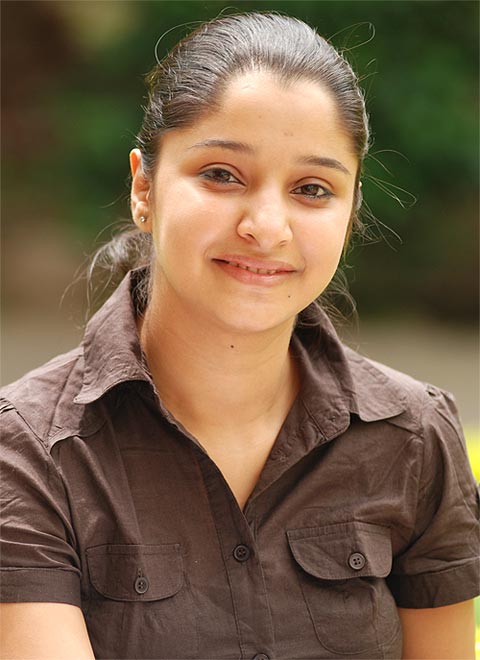
UPSC all-India second topper Rukmani Riar did not believe
in coaching and cracked the exam in her first attempt. She tells us how
she did it.
Ever since the UPSC results were announced,
Rukmani Riar's phone hasn't stopped ringing.
Although
Chandigarh-born Rukmani has received gold medals for her academic
achievements and research during graduation and post-graduation, she
says that this new feeling of success is overwhelming.
"People
from all over have been trying to reach me to congratulate me and my
family. It's a proud moment for all of us," beamed the 26-year-old, who
holds a master's degree in social entrepreneurship from the Tata
Institute of Social Sciences, Mumbai where she consistently topped her
class.
What makes her second-highest nationwide UPSC score even
more special is the fact that Rukmani did not opt for any coaching and
cleared the civil services exam in her very first attempt.
"If
you are consistent and perseverant in your preparation, you can crack
the exam without coaching," suggests the topper, who chose political
science and sociology as her main subjects for the exam.
For
someone who was unable to cope with the pressure of moving to a boarding
school and failed in Class VI while studying at the Sacred Heart School
in Dalhousie, this success is a testimony to the adage that failures
are the stepping stones to success.
"Ever since I failed in
Class VI, I am scared of failure. It can be very depressing. But after
that incident, I made up my mind that I won't sulk and complain. I will
work hard and give things my best. I believe that if one decides to
persevere and come out of that phase, nothing can stop you achieving
success," advises Rukmani over the phone from Chandigarh.
"I
always wanted to serve the nation," she adds. And you can well believe
her -- she has interned with the Planning Commission of India and NGOs
in Karnataka and Maharashtra over the last few years, researching and
understanding various social policies and finding ways to help them make
a positive impact upon society.
Following her success in the
exam, Rukmani wants to become an IAS officer so that she can use her
experience and training to serve the nation in a better way. Her father
BS Riar works as a lawyer in Hoshiarpur and her mother is a housewife.
In this interview with
Divya Nair,
the young achiever talks about how she overcame the fear of failure,
how she seeks inspiration from Aamir Khan, Shah Rukh Khan, Abdul Kalam
and Manmohan Singh and offers tips to aspirants on how to crack the
exam.

|
 |
How did you prepare for the exam without any coaching? Kindly share your strategy for success.
I
believe that if you are disciplined in your approach, you will not
require any coaching. I started preparing for the exam in August 2010,
because the exam was scheduled in June 2011. I had a year's time to
prepare. I relied on the NCERT textbooks for study material and set
daily targets -- about six hours of study a day.
I am not a very
studious person, so I had to be disciplined and focus on days when I
could give my best hours. There were times when I did not feel like
studying, but I ensured that whenever I did, I would complete what was
on my agenda even if it meant stretching my study time to eight or nine
hours.
Consistency was another factor. I know friends who study
for 10 to 12 hours a day and then take a break. So they forget what
they've learned and have to spend extra hours revising. I ensured that I
studied everyday so as not to overburden myself when the exams
approached.
Which was the most difficult part of the exam? How did you tackle it?
There
was nothing difficult as such, because I had chosen my favourite
subjects (political science and sociology). I believe that if you love
what you do, you won't feel like you are working hard on it.
Why did you choose to appear for the UPSC exam after your post-graduation?
I
wanted to have a back-up plan. Although it was my dream to crack the
exam, I did not want to risk my career after graduation. Plus, I wanted
time to prepare well.
Illustration: Uttam Ghosh

|
|
You said you did not want to risk your career. Does that mean you are scared of failure?
Yes, I am scared of failure. I was in Class IV when my parents moved me to Sacred Heart School, a boarding school in Dalhousie.
I
was young and could not cope up with the change. I flunked Class VI. I
was not academically bright, but failing in school was depressing for me
even then.
My peers looked down upon me. I felt very
disappointed that I had let down my teachers and parents. That's why I
am scared of failure.
How did you overcome that phase?
Initially,
I sulked and felt bad about myself. But after some time, I realised
that sulking was not the solution to my situation.
If I had to
succeed, I had to find a way out of the situation. I decided to work
hard. I wanted to show everyone that if I was given an opportunity, I
would definitely make it worthwhile. And when I succeeded, I saw the
dramatic change in people's behaviour.
I started liking the way my efforts and hard work were appreciated. I think that was when I made friends with success.
Failure
isn't bad, but it is up to each one of us, whether to take it as a
lesson or a punishment. If you are willing to work hard, you can
overcome any obstacle that stands in your way.

|
|
What inspired you to choose a career in civil services?
I
have always wanted to serve society. I chose sociology as my major for
my graduation. It was my dream to become an IAS officer. I knew I would
crack the exam, but I wasn't sure that I would be among the toppers.
The majority of UPSC toppers in the last few years have been women. How does that make you feel?
I
have always felt that girls are hard-working and strong-willed. If
given an opportunity, they can definitely shine and showcase their
talents.
At a time when girls have to fight social crimes like
female foeticide, denial of primary education and dowry deaths, I am
proud that we are setting a bright example for the future.
Illustration: Uttam Ghosh
Have you been involved in any activities that you think will help you in your IAS career?
Before
appearing for the exam, I wanted to understand the problems faced by
people across the country. I also wanted to gain some exposure with
regards to the working of the government, policy-making, developmental
schemes etc.
So along with my post-graduation, I worked with
several NGOs like Ashodaya in Mysore, Karnataka and micro-finance firms
like Annapurna Mahila Mandal in Mumbai. While Ashodaya deals with the
emancipation and empowerment of sex workers, Annapurna identifies and
organises developmental activities for women in various slums across
Mumbai and Pune.
I was also involved in a project for Tata
Corus. They were planning to set up a new steel factory in the Ratnagiri
district of Maharashtra and the project involved studying the culture
and lifestyle of people in the villages of Vanvette and Aiziwal, so that
we could suggest plans for their employment and empowerment. It was a
part of the company's corporate social responsibilities and was a good
learning experience for me.
After my post-graduation, I joined
the Centre for Equity Studies in New Delhi and worked under the
leadership of activist Harsh Mander. I visited urban slums in places
like Jama Masjid and Yamuna Pushta to rehabilitate and help them.
What were the people's problems you identified during the course of your internship?
I
realised that problems vary according to the geography, climate and
culture of people. While primary education for girls is a major concern
in northern India, several youngsters are falling prey to drug addiction
along the borders of Punjab and several slum areas.
I also
realised that there are government schemes for each of these problems,
but as a famous bureaucrat once said, 'for every one rupee spent by the
government, only 10 paise reaches the needy.'
Be it the
National Rural Health Mission Scheme or the Anganwadi Scheme, they are
not implemented properly and hence the poor and underprivileged don't
get what they deserve.
Illustration: Uttam Ghosh

|
|
After becoming an IAS officer, how do you plan to address these problems?
I
know it's too early to comment, but I would like to take up one thing
at a time. I will concentrate on bridging the gap in the implementation
process. The right schemes should reach the right people. I want to set
an example of good governance with accountability.
Where do you draw inspiration from?
I
am inspired by different people everyday -- from Aamir Khan's urge for
perfection to Shah Rukh Khan's growth from a nobody to a superstar, each
one has his own way of achieving success.
At the same time,
Abdul Kalam's selflessness and Manmohan Singh's sheer honesty and
dedication to his job teach me that you can choose whatever field you
want and still inspire people by your actions and do your bit for
society.
I also look up to social activist and my mentor Harsh
Mandera. The fact that he quit his cushy, high-paying job to serve the
people only reinforced my dream to work for the nation.
Besides academics and participating in social causes, what are your other interests?
I
am a very active person. You will hardly find me sitting idle. I listen
to music, write poetry and watch movies. I also love travelling,
meeting new people and trying out new cuisines. I am quite a foodie.
Illustration: Uttam Ghosh
Kindly share some dos and don'ts for those who want to pursue a career in the civil services.
There are no 'don'ts': there are only dos for success.
You have to work hard. There is no substitute for hard work.
You have to be disciplined in your approach while studying or planning your career.
And yes, dreams do come true; you just have to believe in them.
Do you have a message for our young readers?
I
would like to tell them that the country needs the support and
cooperation of its people to evolve from its current condition. You may
not become a successful bureaucrat or join the civil services, but if
you ever get a chance to serve the people in some way, you must not
hesitate to take up the opportunity.
Illustration: Dominic Xavier
Source : http://www.rediff.com/getahead/slide-show/slide-show-1-achievers-interview-with-upsc-topper-rukmani-riar/20120510.htm








 Posts
Posts


